
CAMRA head Ash Corbett-Collins: 'removing pub licensing notices from local papers is the wrong kind of reform'

Behind talk of cutting ‘red tape’, campaigners fear a vital community link could be lost ⚠️
- The Government plans to scrap laws that require pubs to publish alcohol licensing notices in local newspapers
- Ministers say the change will ‘cut red tape’ and help pubs thrive
- But CAMRA warns the move risks reducing transparency and community input
- The group says pubs face far bigger threats from rising costs and taxation
- Removing notices could also hit local publishers and weaken public awareness
The Government’s plan to scrap the requirement for pubs and bars to publish alcohol licensing notices in local newspapers has sparked fresh debate over how much support Britain’s locals are really getting.
Ministers say the change, part of a four-week review, will help pubs “cut red tape” and “thrive”. But industry voices warn the proposals risk missing the bigger picture.
Ash Corbett-Collins, chairman of the Campaign for Real Ale (CAMRA), says that while modernising regulations makes sense, this particular change won’t solve the fundamental challenges facing the sector.
It comes as our title, along with our sister brands across the country, joins a national campaign to scrap the proposals and protect the public’s right to know. And we’d like to know how you would feel if those applying for a licence to sell alcohol in your community were no longer obliged to notify the community of this intention - share your views here.
What are the proposals?
For decades, pubs seeking to apply for new licences or make changes to existing ones have been required to publish notices in their local paper.

It remains one of the few consistent ways for residents to be informed about changes in their area. But the proposal to move the process online could mean fewer people ever see these notices, raising questions over transparency and the public’s right to know.
“It’ll make some difference, some positive and some negative,” he says of the plan, adding that it’s “important that communities are able to understand proposals being brought in, [and] whether they support them or not.”
READ MORE: Axing pub licensing notices would silence your voice - why we’re determined to stop plans
“If your local pub is making changes, it’s important that you know them, and you can say, ‘yeah, that's a really good change. I'd like to support that change. I know that will improve our community.’
“Whatever method the Government keeps for these notices, it must be accessible to the widest range of people, so communities can buy into improving their pubs together.”
That accessibility, he argues, goes beyond the interests of landlords and councils; it’s about the relationship between pubs and community accountability.
Removing newspaper notices could also hit local news publishers financially, stripping away a small but steady source of income. The loss could further weaken the information ecosystem that connects pubs to the people they serve.
‘The fundamentals need looking at’
Corbett-Collins is quick to stress that licensing bureaucracy isn’t what’s driving pub closures.
He says removing alcohol licensing notices is but “a small change,” and one that is unlikely to impact the day-to-day running of a local pub.
“I've never met a publican who said ‘the biggest problem for me making changes to my pub is I need to put a notice in the local newspaper,” he added.
The real issues, he says, are things like pubs “being told by the council, ‘you can't have that outdoor seating because of some obscure old rule,’ when actually the community would probably support it if they were able to put the notice in the newspaper.”
“It's the fundamentals that need looking at, not the method of communication.”
‘The biggest pressure is just staying viable’
Those fundamentals, he says, are economic rather than bureaucratic. Pubs are battling soaring costs, squeezed margins, and heavy taxation, issues that have little to do with the licensing process.
“The biggest pressure when we talk to publicans, landlords and landladies is just staying viable.
“The biggest thing they're suffering from is the razor-thin margins... the rising cost of doing business, from getting in their products and stock, paying their staff and utilities; just keeping the lights on and the doors open.razor-thin
“Then after that it's the taxation that happens on those sales - it's almost unviable.”
CAMRA’s focus ahead of the upcoming Budget is squarely on those financial levers. The organisation is calling for a reduction in VAT for hospitality, reform of business rates, a review of National Insurance contributions, and an increase in draft duty relief.
Corbett-Collins says reducing VAT in the hospitality industry would make a real difference, pointing to Ireland’s recent reintroduction of a lower rate for its night time economy.
“Studies have shown that when VAT has been lowered, it brings in a huge amount to that industry. People go out, they spend more, it keeps pints more affordable, and ultimately employs people and brings more money into the economy than it loses.
He adds: “Pubs pay about five times more than their fair share on business rates, which makes it unviable for many to continue. These changes won’t necessarily make your pint cheaper overnight — but they’ll stop it getting more expensive.”
‘Like rearranging deckchairs on the Titanic’
The Government’s proposed licensing reforms, by contrast, are “more like rearranging deckchairs on the Titanic,” he says, bluntly.
While measures such as extended opening hours or relaxed entertainment rules could help already successful pubs experiment with new ideas, they won’t rescue those on the brink.
“These are all things that are brilliant if you've got a pub that's doing well and you want to take the next step,” he says.
“But if you’re a publican thinking ‘I don't know if I'm going to be here in six months,’ being able to put on live music or stay open till midnight isn't going to make the difference.”
‘There needs to be a long-term plan’
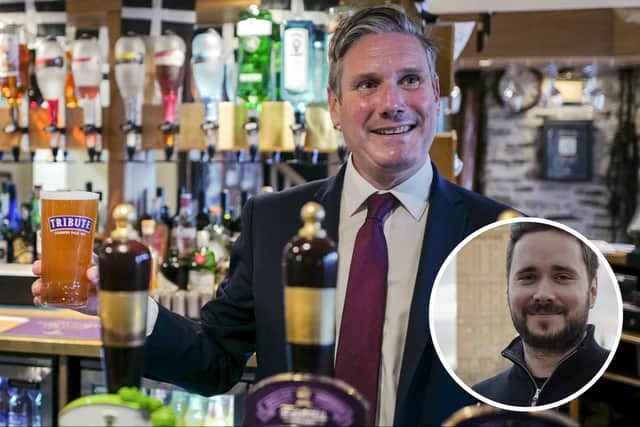
And for all the rhetoric about pubs being “the beating heart of our communities”, Corbett-Collins believes policymakers often treat them as little more than a backdrop for photo opportunities.
“You see a lot of politicians pulling a pint. They come out at certain times of year and they say, ‘oh, yes, I love my local, here I am.’ And they'll pull the pint and then they disappear for 364 more days until they want the same photo opportunity.”
Corbett-Collins says pubs aren’t just businesses; they tackle loneliness, build community, and offer a vital third space when so many others are closing.
As for Prime Minister Keir Starmer and Business Secretary Peter Kyle, his message is simple: “Come and actually see what a pub does.”
“Talk to publicans about what they need to survive and thrive. Then let's make a long-term plan; it can't be fingers in the holes, stopping the leaks - we've had years of that. There needs to be a long-term plan to protect the future of our pubs.”
Without bold action, he warns, Britain’s pub culture risks fading into a bland, homogenised future: “In 10 or 15 years’ time, I don't think it's scaremongering to say that there’ll be very few [pubs left], and they won't reflect the pub culture that we want.”