
Council backs call for fairer rules on solar farm plans
East Riding of Yorkshire Council has unanimously backed a motion calling for fairer planning rules on large-scale solar developments, in a decisive step to protect rural communities, farmland, and local voices.
The motion, brought forward by Cllr Victoria Aitken, highlights growing concern over the scale and concentration of nationally significant solar farms across the East Riding, with at least five major schemes now affecting the area.
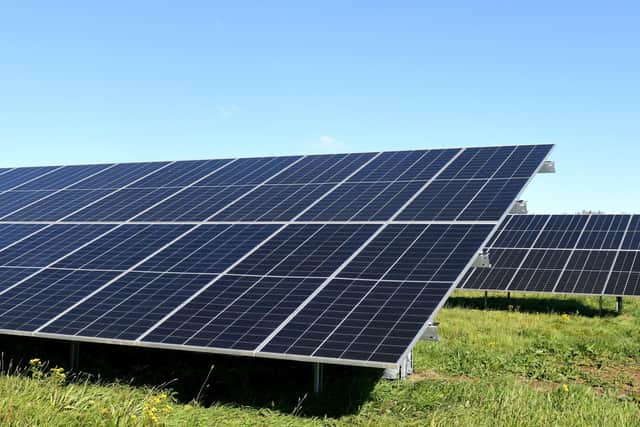

When combined, approved and proposed developments equate to over 6,000 hectares of land – the equivalent of around 8,500 football pitches – much of it currently used for agricultural production.
The East Riding’s rural landscape plays a vital role in food production, biodiversity, and local identity, and the motion reflects growing concern that current planning frameworks are not keeping pace with the scale of development being proposed.
A solar farm proposal for the Market Weighton and Pocklington areas was recently announced.
‘Humberhead Solar’, as the proposals have been named, would be capable of producing 500MW across a number of sites in the region.
The proposals, brought forward by Island Green Power (IGP), would be expected to power approximately 115,000 homes.
Speaking after the vote, Cllr Aitken said: “This is not about being anti-renewable energy, we all support the transition to clean energy. But what we are seeing in the East Riding is the increasing concentration of very large-scale developments in rural areas, without proper consideration of the cumulative impact. We must ask a simple but crucial question: how much is too much in one place?”
Under current rules, solar farms of this scale are classed as Nationally Significant Infrastructure Projects (NSIPs), meaning decisions are taken at national level, often by the Planning Inspectorate and Secretary of State, rather than locally.
Cllr Aitken added: “Our residents are not experiencing these developments one at a time, they are experiencing them together. These schemes are changing landscapes, taking productive farmland out of use, and placing growing pressure on rural communities. Yet the system does not properly account for that cumulative effect.”
The Council is now formally calling on Government to:
• Recognise cumulative impact as a material planning consideration
• Consider introducing stronger controls on how much agricultural land can be converted to solar use in one area
Alongside this, the Council will develop a clear, accessible guide for residents to help them understand:
• How the national infrastructure process works
• What counts as a material planning consideration and how they can make their voices heard effectively
Cllr Aitken said: “This is about fairness, balance, and making sure people feel informed and empowered, not shut out of decisions that affect the places they call home.”