
Vintage Views with Aled Jones: Bringing to life a beach scene from the 1930s
What an incredible piece of town history to uncover – a postcard dating back to 1931, hidden away in an old book found by me at a boot sale in Sewerby. I think it had been used as a bookmark.
After almost a century, this lovely real photo image has resurfaced, bringing to life a beach scene from generations ago. It’s amazing to think about the people that feature in it, the lives they led, and the contributions they made to where we are all today. A true piece of social heritage.
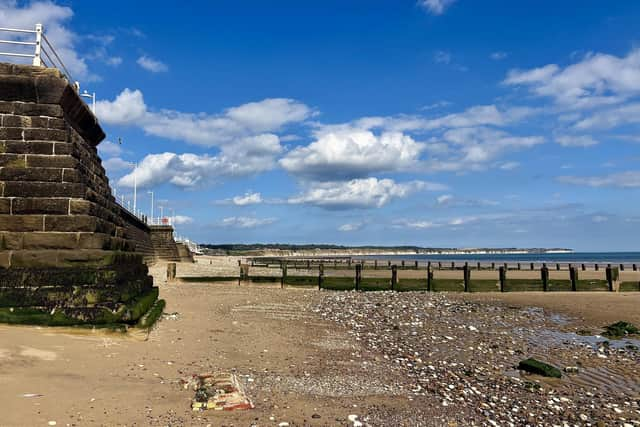

The card was posted by a holidaymaker staying on Tennyson Avenue, who jokingly wrote, “Weather glorious with exception of a few tons of rain, and hail stones as big as ostrich eggs, supplemented by two thunder storms, otherwise everything is fine.”
Our retro photograph shows a large crowd of people on the north sands enjoying a variety of stalls and entertainments.
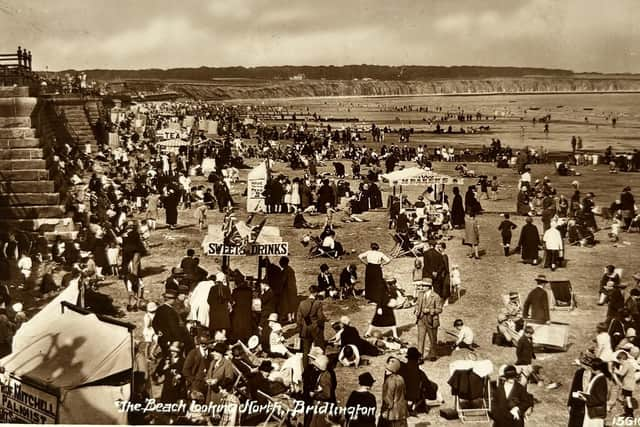
The Beaconsfield Sea Wall on the left was erected in 1888. The ladies’ outfits, and especially the hats, are typical of the 1930s.
Note the palmist’s tent in the left foreground. This fortune-teller has adopted the title of “Professor” as a shrewd marketing tactic to project credibility and authority.
The sweets and drinks stall in the middle appears to be doing a roaring trade. A glass of lemonade at this time typically cost 1d to 2d (one to two old pence)!
Other stalls include one for ice cream (“hokey pokey”), run by H Baker’s who continued in business until 1987.
Observe the changing tents at the entrance to Trinity Cut and the rowing boats plying the foreshore.
The youngsters seem to be enjoying themselves building sandcastles. Folk used metal buckets then and the spades were metal as well. There was no plastic.
Sandcastle building competitions were popular summer events at Bridlington during the 1930s, drawing huge crowds of holidaymakers.
Events usually featured separate comps for young children, family groups, and aspiring adult builders. Wouldn’t it be wonderful if they were brought back?
The postcard was published by E Taylor photographers at 87 Promenade, and is an actual photographic image developed from a negative.