
Bridlington students get CPR training on Restart a Heart Day
Yorkshire Ambulance Service is marking Restart a Heart Day on Thursday, October 16 with many events designed to improve cardiac arrest survival rates, including two at Bridlington schools.
Off-duty ambulance staff and volunteers will visit 23 schools in East Yorkshire, including Headlands School and Bridlington School Sixth Form.
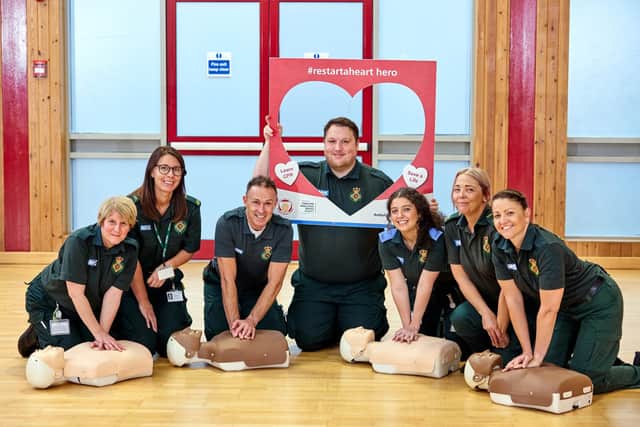

Students will learn the skills which can double the chances of someone surviving a cardiac arrest.
People living in East Yorkshire are also being urged to watch the video to give them the confidence to step up and act in the ultimate medical emergency.
Yorkshire Paramedic Tristan Metcalfe, who stars in the video alongside BBC Sport’s Sam Harris, said: “CPR is really easy to learn and the impact you can have could literally be the difference between life and death for someone. We are really grateful to Dynamic for developing this fantastic video which shows just how straightforward it is to step in and make the difference in these situations where every second counts.
"I’m super proud to be part of helping others to learn this skill and of everyone who is getting involved with Restart a Heart Day. Together, we can help more people be confident to take action and potentially save a life.”
Recent St John Ambulance research showed that a third of the British public are afraid to give CPR to a woman because they are worried about touching breasts. The same survey found that 38% of Britons said they would feel uncomfortable using a defibrillator on a woman, as its pads need to be placed on bare skin in the chest area, requiring the
removal of a woman’s bra.
For the first time on Restart a Heart Day, Yorkshire Ambulance Service will be using female manikins for the CPR training at one of the participating schools to help break down barriers and stigma associated with providing life-saving assistance to women.
Jason Carlyon, community engagement manager with Yorkshire Ambulance Service, said: “In a cardiac arrest, the technique for giving CPR is the same for both women and men. The issue is that women are less likely to receive bystander CPR in public than men are, which can lead to lower survival rates. By introducing anatomically accurate female manikins into our training sessions, we can highlight this disparity and normalise CPR on all body types to help overcome common hesitation.”
Visit restartaheart.yas.nhs.uk/get-involved/cpr-training-resources/ (tinyurl.com/282n7jsx) to watch the CPR video.