
What is chikungunya, the new virus spreading in China? How bad is the outbreak and could it spread to the UK?

The risk of the chikungunya virus spreading to the EU has been classed as ‘high’ by the ECDC 🚨
- There is an outbreak of the chikungunya virus in China.
- People travelling to the area have been advised to ‘practice enhanced precautions’ by the Centre for Disease Control (CDC).
- In Europe, the European Centre for Disease Prevention and Control (ECDC) has classed the risk of the virus spreading to the EU as ‘high’.
China is grappling with a new outbreak, with travellers to the area being advised to “practice enhanced precautions”.
The chikungunya virus has been spreading in Guangdong Province, China, with most cases reported in Foshan city, according to the Centre for Disease Control (CDC).
The chikungunya virus is spread to humans through the bite of an infected mosquito.
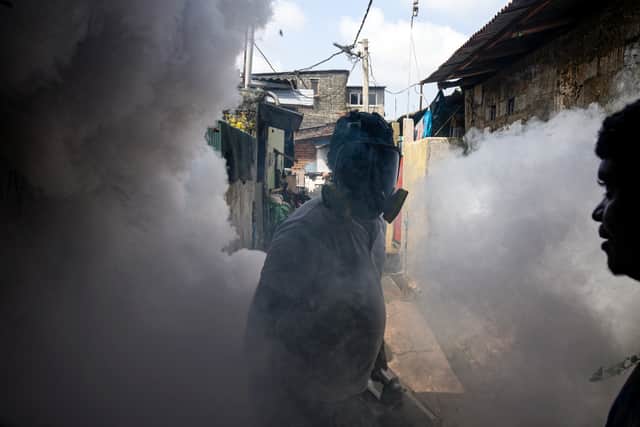
Local authorities in China have been seen spraying disinfectant throughout the streets, in scenes that are similar to those from the days of Covid.
So, what is the chikungunya virus, how bad is the outbreak, and should we be worried about it coming to the UK? Here’s everything you need to know.

What is the chikungunya virus?
Chikungunya is a viral disease transmitted by Aedes mosquitoes to humans when they are bitten. The virus is found in more than 100 countries in Africa, Asia, North, South, and Central America, the Caribbean, and Pacific islands. The infection is not common in Europe, but has been found in Italy in France.
What are the symptoms of the chikungunya virus?
Symptoms of chikungunya usually begin four to eight days after being bitten by a mosquito.
They start with a high temperature accompanied by intense joint pains. With additional symptoms including a rash, headache, feeling tired (fatigued), feeling sick (nausea), and muscle pains.
Serious complications are not common, with people usually feeling better after a few days or a week. However, some people may experience ongoing joint pain for weeks or longer.
There is no specific treatment for chikungunya virus infection; however, there are two chikungunya vaccines that have recently been approved for use in the UK.
How bad is the outbreak in China?
There is a chikungunya virus outbreak in Guangdong Province, China, with most cases reported in Foshan city.
The outbreak has been classed as a level two by the CDC, with those in the area advised to “practice enhanced precautions”, such as protecting themselves from being bitten by mosquitoes by using insect repellent, wearing long-sleeved shirts and trousers, and staying in accommodation that has screens or air conditioning.
Travellers are advised to get vaccinated against chikungunya, whilst those who are pregnant should reconsider travelling to the area as there can be severe risks for mothers and newborn babies.
Could the chikungunya virus infection spread to the UK?
There is no risk of catching the chikungunya virus infection in the UK. Reacting to the outbreak, Dr Robert Jones, Assistant Professor, London School of Hygiene & Tropical Medicine (LSHTM), told Science Media Centre: “There is no risk of contracting chikungunya in the UK at present.
“The mosquitoes that transmit chikungunya are not established in the UK, although they are found in parts of southern Europe. Occasionally, imported cases are diagnosed in returning travellers, but these do not lead to local transmission.”
In Europe, the European Centre for Disease Prevention and Control (ECDC) has classified the risk of the chikungunya virus spreading in the EU as “high”, due to the risk of imported cases through infected travellers and the presence of mosquitoes in countries around the Mediterranean coast.
You can find out more information about the chikungunya virus infection and vaccines that are available at NHS Fit For Travel.