
The Vintage Views column with Aled Jones
Bridlington’s Grand Pavilion first appeared in the Edwardian era and was home of many summer shows and local amateur productions.
Built on the site of a fort at the northern end of Prince’s Parade, it was opened by the Lord Mayor of London in 1906.

This largely wooden building, which was a superb example of the Moorish-style architecture much in vogue in those days, could seat around 2,000 people. It was typical of the pleasure palaces found on many seaside piers.
The Parade, erected in 1866, had been extended between 1904-6 and the large extra space was always earmarked for a theatre.
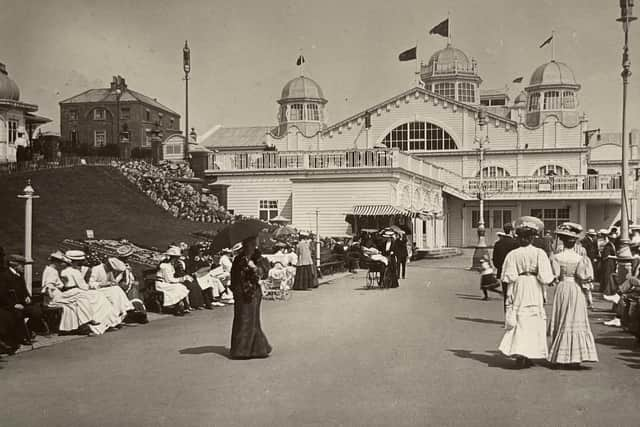
When the Grand Pavilion was unveiled extra policemen were drafted in to control the huge crowds. It was considered so beautiful the townsfolk believed it to be straight out of a story book.
The amenity made history when the first moving pictures at Bridlington were shown there shortly after its opening.
A key feature of the building was an attractively ornate Banquet Hall that was used for formal dinners.
After a while it became a popular venue for concert parties under a lease held by the Esplanade Café Company.
The Grand Pavilion was demolished in November 1936, because the structure had obscured views across the Bay! A magical creation lost for future generations.
It is interesting to think that the old Pavilion today would be a Grade 1 listed historic building.
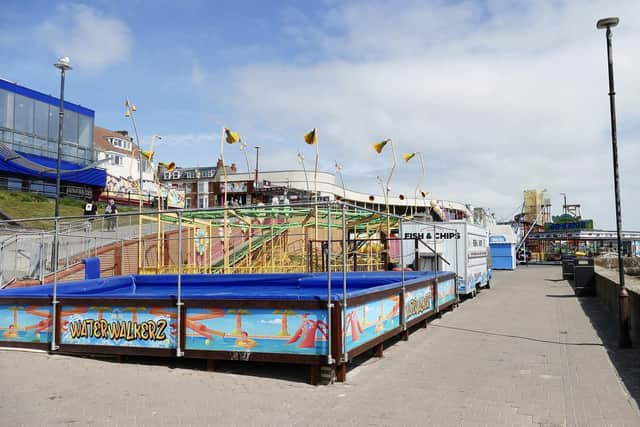
This real-photo postcard shows a magical view of it from the south in the hot summer of 1909. The entire area is now a funfair.
Despite the bright sunshine there is no casual dress in sight. People are strolling along the Parade to see and be seen.
The edifice in the left background is part of the ticket-office which allowed entry to the Parade from the Esplanade. Entrance at this time was 2s. 6d. per week or 6d. per day (about a fiver in today’s money).
Notice the Georgian building to the right, the town house of the Graeme family of Sewerby Hall. Known as Fort Hall, it was demolished by the council in 1931 and is now the site of Leisure World.
In 1890 the Local Board arranged for Prince's Parade to be illuminated by electric Arc lights. Incredibly, several original lamp posts are still in use today: one is pictured to the immediate right of the postcard.