
Vintage Views column with Aled Jones: the Summer Gardens theatre
This vintage postcard celebrates the Summer Gardens theatre, tying it to the resident act there, the Waterloo Pierrots.
The nostalgic image honours Bridlington’s famed donkeys – records show that these noble animals were used on the North Beach as early as the 1860s.

A pair of donkeys, one with a rider on its back, feature to the right of the picture. There are small horses nearby, suggesting that ponies were up for hire as well.
Printed during a high point for local tourism, this postcard from c.1910 links two eras – the elegant Edwardian age and the “golden age” of youth.
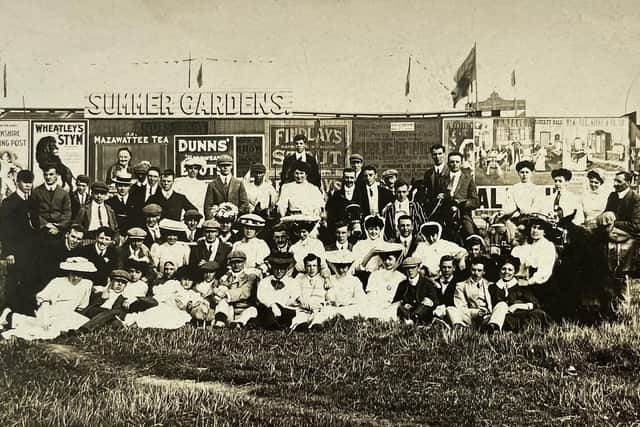
The well dressed holidaymakers posing for the lens show just how stylish people were back then.
The beach donkeys, which have their names on their nosebands, were under the care of Mary Knaggs and kept at the top end of Promenade, reaching the sands via Trinity Cut (Donkey Bridge).
The posters behind the group advertise several leading brands, as well as the Waterloo’s forthcoming shows. Notice the one for Mazawattee Tea (elderly lady), an important tea firm in Edwardian Britain.
The celebrated firm devised many amusing and eye-catching advertisements, including the idea of using a small team of tame zebras to haul one of the Mazawattee vans!
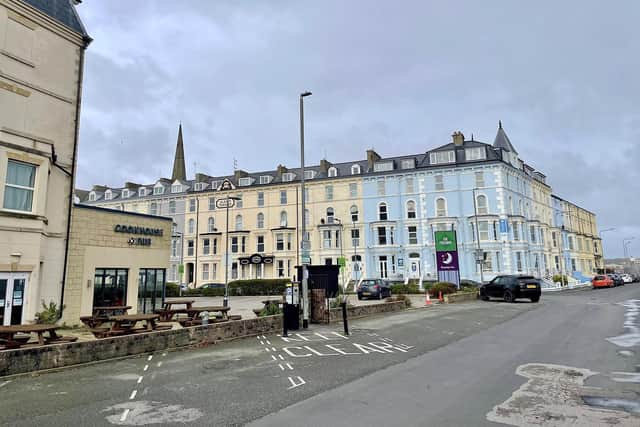
The Summer Gardens theatre was part of a recreation ground known as the Beaconsfield Estate. These pleasure gardens were adjacent to Trinity Church on Flamborough Road and are now occupied by Premier Inn.
This postcard shows the rear of the theatre, where the Waterloo’s gave their evening performances. It was a tin-roofed wooden building which the troupe had purchased in 1909.
Before then, the Waterloo’s chief pitch was on the beach in front of the sea defences, but they also toured the streets giving impromptu performances! In 1912, their pitch on the beach cost £160, then a colossal sum of money (equivalent to £23,000 in 2025).
The successful troupe had first appeared at Bridlington in 1893 and took their name from the Waterloo Café, Garrison Street, where they would change for their shows. Mr Charles Beanland, who preferred to be called “Sammy” formed the cabaret act.
He started his career at Skegness as a talented speed-cartoonist who could also draw pictures upside down and blindfolded!
Known as “the Guvnor” and quite a colourful character, he usually looked in a different direction from his partners in the majority of group photos of the Waterloo Pierrots.
His iconic troupe gave their last performance at the Summer Gardens in 1914. After the war the gardens became a tennis arena, and were later turned into a bowling green.