
Vintage Views with Aled Jones: an artist’s rendition of the ‘Great Gale’
On February 10, 1871, Bridlington Bay was turned into a graveyard for ships and their crews.
Shortly after daybreak, a foul storm hit our coastline that rapidly increased to a hurricane, wreaking havoc in its wake. In total, it is thought that about 70 seamen and in excess of 30 ships were lost.
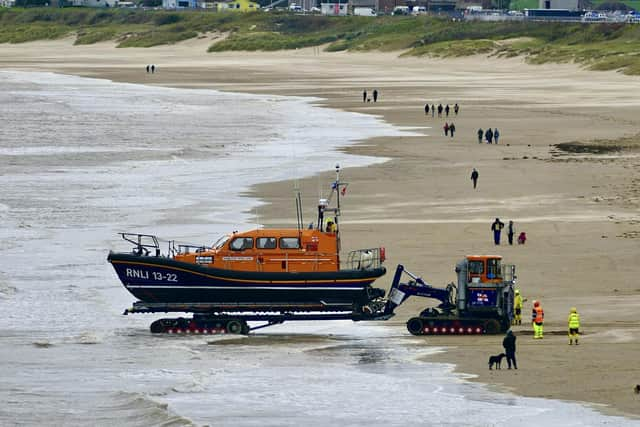

The ‘Great Gale’ has become notorious for its sheer devastation, the worst storm ever recorded in our town’s history.
Take a dramatic stroll down memory lane, this hero image today shows an artist’s rendition of the ‘Great Gale’ and its memorial, a picture that became a well-known postcard in the nineties.
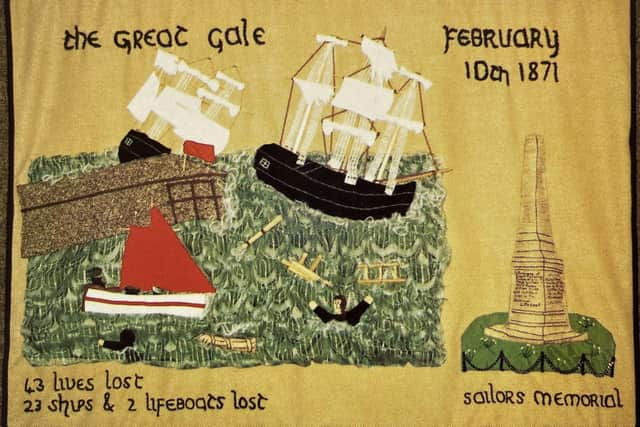
The memorial was erected over the mass grave in the Priory churchyard in memory of the lifeboatmen and seamen who lost their lives.
The postcard refers to the 43 sailors lost that were buried in the churchyard and the 23 ships that are known to have been driven ashore and wrecked in Bridlington Bay.
While Bridlington is often called the ‘Bay of Safety,’ however, when a sudden wind blows from the east or south it can be a different setting altogether.
This was especially the case in the days of sail when bulky ships, heavily laden with cargo, and therefore hard to steer, could in freak weather become death-traps.
An insight into the changing conditions on the day of the Gale is to be seen in the first reports of the tragedy in the Bridlington Free Press:
“The principal cause of the said disaster appears to have arisen from the fact that, up to an early hour, the wind had been almost due west, causing vessels from the north to hug the shore at when suddenly it veered round to SSE, blowing a terrific gale, against which a great many were powerless to bear up, and consequently were driven on shore, or have gone down with all hands on board”.
This brief article can only mention a few of the chief events and most heroic acts in the compelling history of the ‘Great Gale.’
When the storm had reached cyclone proportions in the Bay there was no lack of ships hitting the harbour and adjacent walls. ‘Friends Increase,’ a London-based barge making for the safety of the harbour, hit the sea wall in front of Prince’s Parade with such a force that she smashed into pieces, forcing the crew to scramble to the top of the rigging.
Thankfully, the RNLI lifeboat Robert Whitworth was at hand to save the entire crew, pulling off one of the greatest maritime rescues ever seen in Bridlington.
We must not forget the courage of the fishermen’s boat ‘Harbinger’ that day which launched many times saving a great number of lives. She was consumed by a monster wave on her ninth launch with the loss of six of the nine crew members, including the boat’s builder Robert Purdon, one of the most heroic figures amongst the outstanding personalities, who were caught up in these events of 1871.
There was, of course, not one resident of the town of Bridlington unaffected by the ‘Great Gale’. So powerfully imprinted were its horrors on the minds of people.
Notwithstanding the lives saved on the day, some good came from the tragedy in that it inspired MP Samuel Plimsoll to push for legislation to prevent grossly overloaded ships, which led to the introduction of the famous Plimsoll Line.