
Vintage Views with Aled Jones: an Edwardian postcard of Gummer’s Wharf
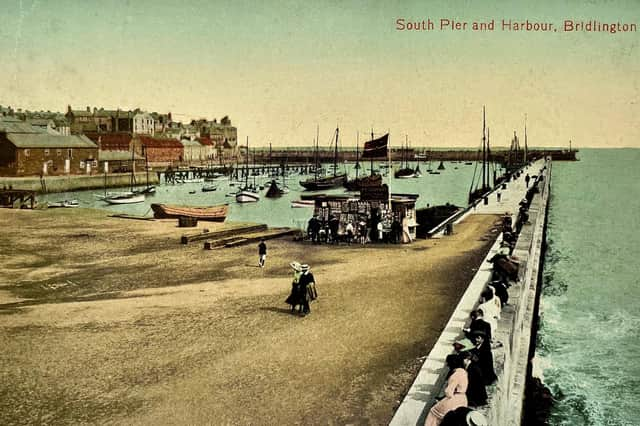
Reproduced here is an Edwardian postcard of Gummer’s Wharf. From the standpoint of development this is about as poor as it gets; but let us realise that at this time the area was primarily a fish quay, this during the ‘boom’ days of the Scottish herring fleets.
Gummer’s Wharf is the spot to the west end of the Harbour and its name originates from the contractor who developed the site, a partner in the firm of Dobb and Gummer of Rotherham.

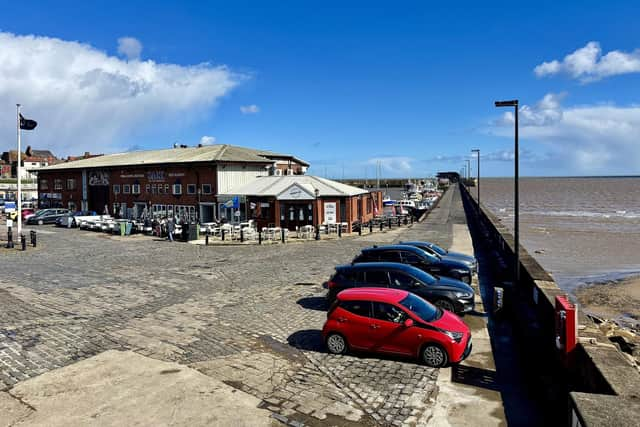
Built in 1885, it’s still a working area today as the steep slipway is used for the storage of small boats and yacht dinghies.
Back in the day, herring boats used to slip into the low landing to the South of the wharf and fish crates were carried up to the work area to be gutted and packed into barrels of salt ready for transportation.
In the early 1900s, herring was an incredibly popular, staple food source, acting as a daily diet for many working-class families. It was a widely consumed item across all social classes.
The fishing fleets of Scotland and north-east England followed the migrating herrings southwards down the coast, and brought their own ‘gutters’ with them.
The ‘gutters’ were extraordinarily skilful in processing the fish, with the majority of them being Gaelic-speaking women from Inverness, Aberdeen and other ports.
The deep-sea herring boats, sometimes as many as 100 at a time, put in to the Harbour during the summer season, landing thousands of fish at a time. Contributing to the economy of the town, they had made Bridlington their main base by 1899.
The postcard photo shows the quay before the RAF sheds were constructed. Built in 1924, they housed the RAF air/sea rescue launches, of which Lawrence of Arabia took such a key role in designing.
The small shack on the right, which has now evolved into the Harbour Cafe, is being used to sell a wide range of postcards and confectionery. Note the sign for Fry’s chocolate.
The early chicken run jetty is on the left. The structure was built in 1904 on the site of the old South Pier and was so-named because of its caged framework.
The image also shows the castellated Victoria Rooms in the far distance. Built in 1846, they included a ballroom, billiard room, newsroom and reading room. In 1899 it was here that the first meeting of the Town Council of the Borough of Bridlington was held.