
Vintage Views with Aled Jones: Navigating the harbour required immense skill
In the late 19th and early 20th Century, barques became more and more commonplace, and were known as the workhorses of the maritime trade, making them a popular sight along the Yorkshire coast.
These three-masted wooden ships carried bulk cargoes like coal, timber, and grain. While historically classified both as barques and barquentines, they are most enduringly known as barquentine colliers.
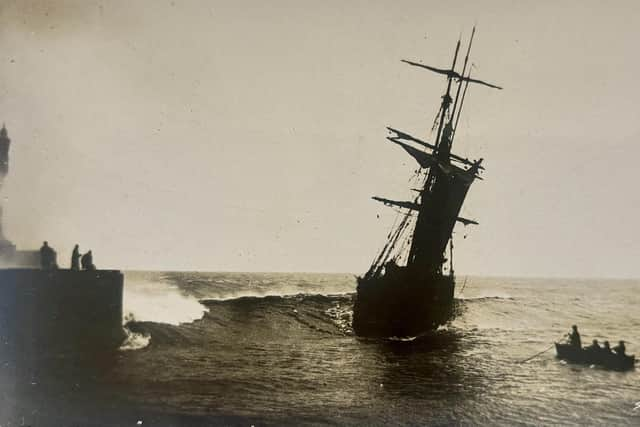

This real-photo postcard from the Edwardian era depicts the barquentine collier Sarah Amy. It was taken by the intrepid local photographer Harry W. Spurr, who ran a highly successful photographic studio in Bridlington for many years. Dated December 14, 1907, it documents the dramatic arrival of the merchant sailing vessel entering Bridlington Harbour.
Bound for the South Coast with coal and six crew on board, the Sarah Amy got into difficulties off Flamborough Head and when the gale worsened her Captain decided to make a dash for safety.
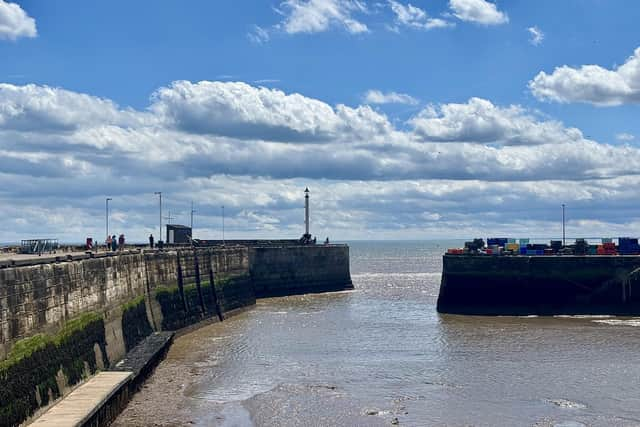
Navigating into the harbour required immense skill due to powerful currents and the narrow gap between the stone piers.
Reflecting the perilous nature of sailing under canvas, the image captures the barque from a starboard-off-bow angle with the North Pier visible on the left, where a large crowd had gathered to see the drama unfold.
A close look at the original postcard shows four men in a rowing boat (right), and the heavy rope indicates they have secured a line to the Sarah Amy to help her steer safely to port. They risked their own lives that day, fighting against the ferocious waves and powerful wind.
A copy negative of this exact dramatic maritime scene is proudly stored in the historic National Maritime Museum collections held by Royal Museums, Greenwich.
The Sarah Amy was originally built in 1874 by J. D. Foster for owner Henry Cox of Portsmouth. A legend in her own lifetime, she served as a collier delivering coal to towns and cities along the English coast. She often navigated the Thames to unload cargo at Billingsgate Dock, Greenwich, and offloaded coal at industrial hubs like the ballast quays of Lowestoft, Suffolk.
In November 1877, the Sarah Amy courageously rescued three crew members from a sinking vessel that had been abandoned following a collision with the Russian barque Ingebord.