
Vintage Views with Aled Jones: Sand’s Cut marked a key town boundary
In bygone times a natural depression marked the boundary between Bridlington and Sewerby, characterised by a wide break in the low boulder clay cliffs extending to the North.
Its local name, in common usage by the 18th century, was Sand’s Cut, and now popularly called Trinity Cut.
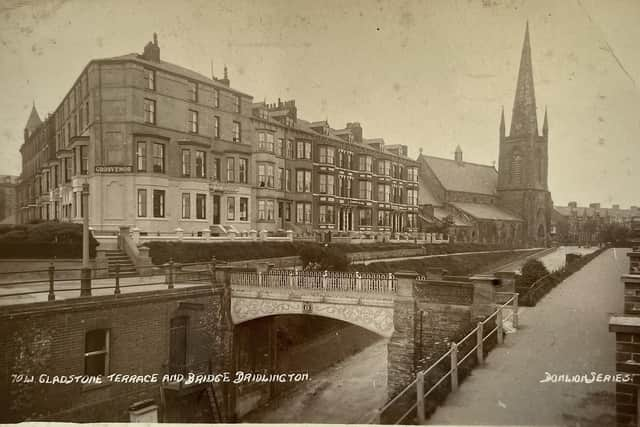

It leads up to the Promenade and is seen here in 1927 with Trinity Church sitting to the left of the image. The cut crosses under a Victorian bridge that connects the Royal Crescent with the seafront. This iron bridge is known colloquially as “Donkey Bridge”, below which the mules giving rides to visitors were led onto the shore.
In the 19th Century the cut was a popular dating spot for couples looking for romance!
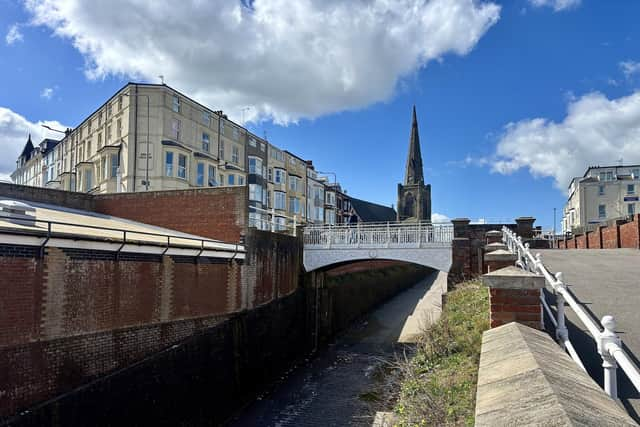
The dawn of organised maritime rescue led to the development of Trinity Cut as a launch site for lifeboats, in the traditional days of sail and oar. The fishermen’s lifeboat Harbinger was launched from the cut during the Great Gale of 1871, with the crew’s extraordinary bravery commemorated annually.
In 1897, £200 was contributed by the local RNLI branch towards the cost of widening the cut and laying a cobbled floor to the slipway.
In the early 1900s a lock-up was built into the walls of the cut as a storage facility for deckchairs and bathing tents. It can clearly be seen in the left foreground. The broad slipway also proved useful as a handy place to park bathing vans.
At the right is the boundary wall of the famous Alexandra Hotel, built during 1863-1866 and in its prime one of the finest establishments in England.
To the left on Gladstone Terrace can be seen the Grosvenor Hotel, which provided a high level of service and amenities, with nice sea view rooms.
Look in front of this building and you will note a large iron post reminiscent of a Victorian lamppost. It is, in fact, a vent pipe for the sewers down below! This and another historic pipe are still evident today.
Some quite dramatic changes have been made to the outward appearance of Trinity Church since the image was taken. Readers will notice the spires on the corners of the tower. These were removed some time ago to prevent falling masonry.