
Vintage Views with Aled Jones: Showcasing work on the sea wall and Parade
In 1867 came a huge improvement in Bridlington – the building of the sea wall and Parade at a cost of £39,000 (equivalent to £6m in 2025). This brought in profits for the creation of the Floral Pavilion in 1904.
Our rare sepia postcard shows the project work in progress to the north of the Harbour. Notice the hoists for lifting and transporting stone blocks.
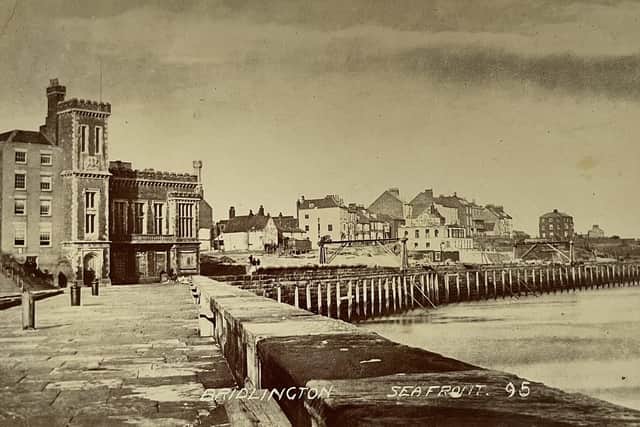

The ancient dwellings on the site were torn down, along with Bishop’s Baths, where patrons had once enjoyed “warm and cold seawater baths”.
Behind the worksite can be seen Garrison Street and Esplanade, both laid out in the 18th Century. The houses shown here bear little resemblance to the present.
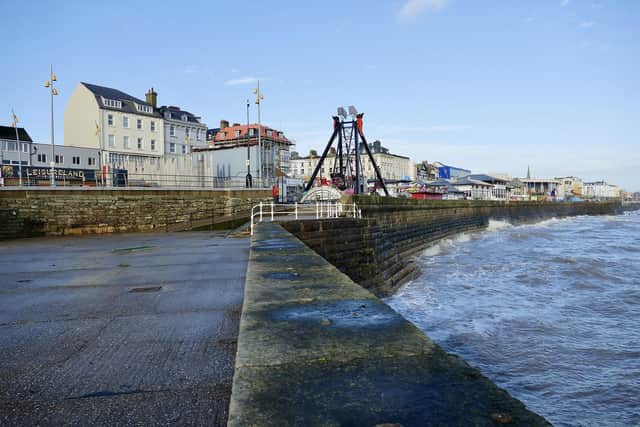
There is no doubt that the Parade was the chief factor in popularising the resort, drawing visitors to the spectacle of fishing cobles and tall ships sailing in and out of the Harbour.
A chief attraction on the Parade was the Bandstand, where a resident orchestra entertained the public throughout the summer season. “Professor” J.M. Wilson was the musical director for many years.
It was not until 1888 that the Parade was formally opened by Prince Albert Victor, when it acquired the name of “Royal Prince’s Parade”.
The impressive looking building at the landward end of the North Pier is the Tudor-style Victoria Rooms, built in 1847 and the town’s major setting for most cultural, musical and social events through the year. It was used as the Town Hall from 1899 to 1932.
Operatic performances were a notable attraction at the venue and the D’Oyley Carte Company gave “The Mikado” and “Pirates of Penzance” in 1888.
The Rooms saw a rising star in the 1900s. It was here that the young Charlie Chaplin performed when working with a touring theatre group.
The Alexandra Hotel is on the very fringe of this image on the north side of the town. Built in 1866, it was the first large hotel in Bridlington and, in its prime, one of the finest establishments in England.
Fort Hall, the town house of the Graeme family, is perched overlooking the Bay on the right of the picture. It was one of the grandest Georgian mansions ever built in the town.
Every summer, Lord Clinton and the Earl of Newcastle would stay there to witness the annual horse-racing on the sands.