
Vintage Views with Aled Jones: St John of Bridlington
It can hardly be understood how a place which has its very own saint wouldn’t celebrate this fact with a commemorative statue.
It’s been a travesty of justice for many a year that St John of Bridlington (1320-79), the last English saint to be canonised before the Reformation, hasn’t received the recognition he so richly deserves. An examination of his life and available sources affords such a powerful case for this belief.

It’s true to say that John de Thweng lived a life of sanctity i.e. by a rule of simplicity, equality, abstinence and prayer.
He is perhaps best remembered for his remarkable care for the local poor.
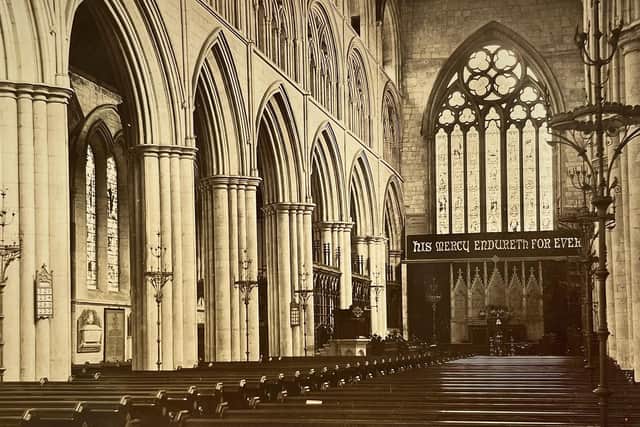
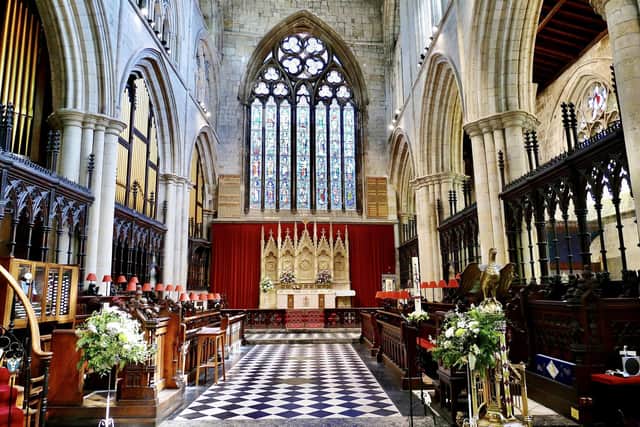
A constant source of hope, strength, and blessing, he immeasurably advanced the popularity and status of the Priory.
He’s known to have carried out many miracles, including walking on the sea, turning water into wine, raising a dead man, multiplying corn and barley, curing the sick and even foretelling the day of his death.
A contemporary medieval verse describes John as ‘a handsome and attractive man, quiet and well-mannered and full of goodness’.
On taking a vow of chastity, 14-year-old John was admitted into the Priory School where he trained as a novice. After finishing his education there, he went up to Oxford. Returning to the town, he became a canon of the Priory, filling many offices and finally becoming Prior in 1362.
Some years after his death he was canonised in 1401, and the shrine of St. John of Bridlington, one of the most beautiful in Western Christendom, was said to have witnessed numerous miracles.
As a result of John’s canonisation, pilgrims flocked from miles around to visit his shrine, creating a cult that would soon become a national movement. They came from all walks of life including Henry IV, Henry V, and many other members of the Lancastrian Royal Family.
It’s interesting that Henry V named John of Bridlington as his special patron in the will he made in July 1415 before leaving England for Agincourt.
Astonishingly, in 1409, a charter issued by the pope himself gave the priors of Bridlington the right to wear the mitre, ring and other episcopal insignia. A rare privilege, since the abbots of St. Mary’s (York) and Selby were the only other mitred heads north of the Trent!
A famous saint attracts population as well as pilgrims, and Bridlington’s rose considerably during the fifteenth century.
A century later, the flood-tide of suppression swept away the medieval Monastery and with it the town’s prosperity, stability and only source of charity.
The beautiful shrine of St John was demolished on the orders of Thomas Cromwell and all its gold work was put into two boxes and sent to the king.
St. John, whose feast day is October 10, is a constant reminder that faith and love are measured by how humbly we live our lives.