
Vintage Views with Aled Jones: The end of the Wesleyan Methodist chapel
It’s hard to believe that this magnificent Neoclassical building, once a thriving part of Bridlington’s community life, was condemned to the bulldozer.
Nowadays the area is dominated by modern units, devoid of character and beauty.
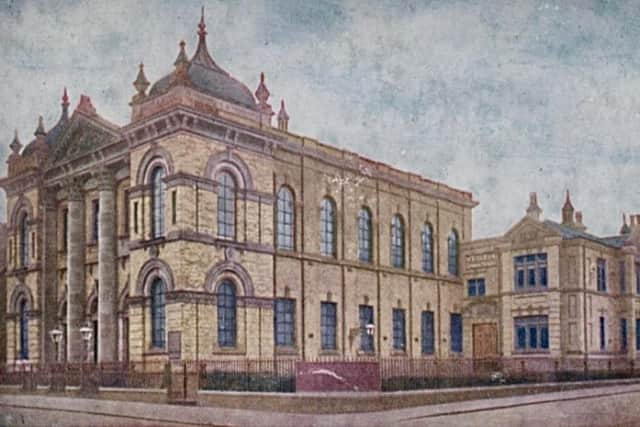

For over 200 years, this Wesleyan Methodist chapel graced Chapel Street and was often packed with believers for the services in the summer months.
Methodism appealed to people by offering a message of spiritual renewal, eternal security in Christ, and active social support, particularly to the poor and neglected.
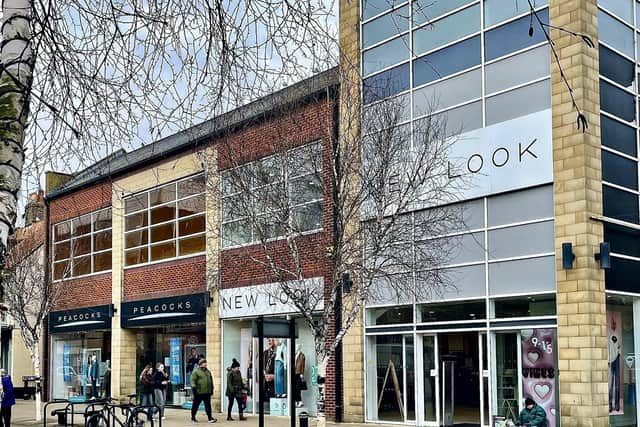
Methodist chapels were seen all over the town: the other end of Chapel Street is the site of a Primitive Methodist chapel. Built at the corner of North Street in 1870, it was replaced in 1969 by a branch of the Hull and East Riding Co-operative Wholesale Society. The building is now occupied by Iceland Frozen Foods.
Our hand-tinted postcard showcases the Wesleyan chapel in about 1910. The road to the right is now the entrance to the Promenade Shopping Centre.
The chapel was constructed in 1795 and was completely rebuilt in 1873 to a design by Mr William Botterill, of Hull, with a 940-seat capacity. It was as fine an example of Victorian Neoclassicism as could be found anywhere in the county.
The landmark chapel was demolished in October 2004, because the roof had collapsed and demolition was considered the only answer. However, it was a Grade 2* listed building so its future was supposed to be secure!
The back wall of the main building and the Sunday School remained derelict for several months. The church organ was left exposed to the elements and was an upsetting sight.
Rather than being demolished, this iconic building would have made the perfect gallery for local artists to show their work, including David Hockney.
Repurposing – often called adaptive reuse – invariably proves better than demolition. After all, an abandoned power station was turned into the world-class Tate Modern!
Demolition also creates huge environmental waste. Repurposing retains the “embodied carbon” already used to construct the building.
There are so many possible reasons for preserving a building that one can suggest only a few of them.