
Vintage Views with Aled Jones: The life of Wallace Hartley
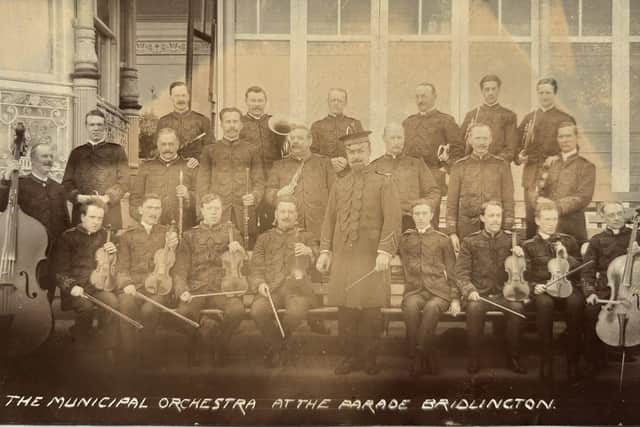
The Bridlington Municipal Orchestra pose for a picture circa 1910. They are assembled outside the Floral Pavilion on Prince’s Parade beside the previously existing bandstand. Signor Enrico Scoma was the conductor and is stood in the centre.
Missing from the image is Wallace Hartley, who played in this orchestra for six years before his career at sea. His story, so closely linked to our town, is one of selfless courage, faith, and resolve.

Wallace Hartley (1878-1912) was born in the market town of Colne in Lancashire, attending the town’s Methodist day school, where he learned to play the violin from a fellow congregation member.
He was determined to pursue a musical career and following a spell playing with the amateur Huddersfield Philharmonic Orchestra he became first violinist with the Bridlington Municipal Orchestra in 1903. It was a dream job in a dream location and he instantly fell in love with the sea.
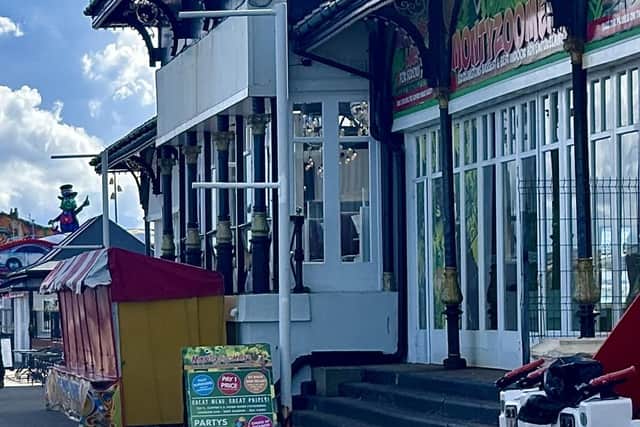
It was while working at the “Pav” that he met his fiancée Maria Robinson, who resided in Bridlington (at Fairseat House). They planned to marry as soon as money allowed.
In 1909, leaving his fiancée behind, Wallace accepted a job with the Cunard line, sailing first on the Lusitania and then joining her sister ship the Mauretania as bandmaster.
In April 1912, he made the fateful decision to accept employment as bandmaster on the maiden voyage of the White Star Line's prestigious new ship, RMS Titanic.
When the colossal liner hit an iceberg and started to sink Wallace and his fellow band members started playing music to help calm the passengers and avoid a mass panic.
A tabloid at the time reported: “The part played by the orchestra on board the Titanic in her last dreadful moments will rank among the noblest in the annals of heroism at sea”.
Fittingly, the last tune the band played as the liner sank was ‘Nearer, My God, to Thee’.
It was one of England’s blackest nights. But the many tales of heroism, courage and sacrifice in the midst of the tragedy meant that the nation’s spirit emerged from the night of April 14, 1912 stronger than ever.
It was two weeks before Wallace’s body was recovered from the icy waters of the North Atlantic. He was found fully clothed with his leather violin case strapped to his body.
Wallace Hartley died a hero, and one thousand people attended his funeral service, with an estimated 30,000-40,000 lining the route of his funeral procession.
Some of Wallace's former colleagues in the Bridlington Municipal Orchestra also played at a memorial service for him at the resort.