
Vintage Views with Aled Jones: the popular Switchback Railway
The Switchback Railway was one of the most popular and visually impressive of Bridlington’s former attractions. It was built at the rear of Carr Lane (later to be re-named Sands Lane) in 1890, the late Victorian era.
As you can notice, the entrance to the railway was daring in its approach to design. It truly had an imposing appearance.

It sought to create a classical, temple-style arch that was bold, dramatic, and instantly attractive to Victorian and Edwardian visitors.
It’s shown decorated to celebrate the coronation of Edward VII in 1902. Behold the flags and Prince of Wales feathers on show.
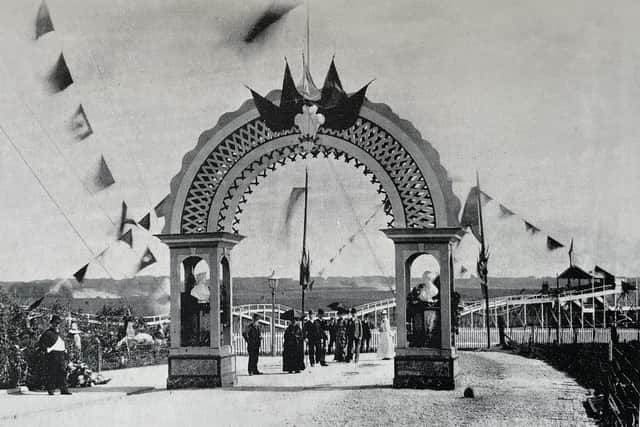
Observe, too, the alcoves filled with life-like marble busts, so reminiscent of ancient culture. I wonder who’s depicted in them?
Smartly-dressed people stare at the camera, blissfully unaware that an audience 123 years into the future are staring right back!
Our image was taken on a hot summer’s day yet everyone seems to be over-dressed for the time of year.
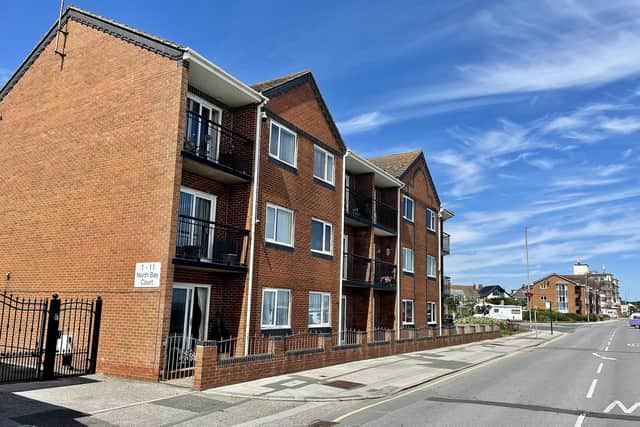
This Romanesque-style entry, was where Burgin’s Fun City stood from 1923 to 1999. The Marine Drive site is now occupied by an apartment block.
On Carr Lane was a gate used by wagons from the nearby villages – day trips to the seaside were such an important part of the year for rural folk.
The railway, which can clearly be seen in the background, was a wooden structure not unlike a modern roller-coaster. Note its winding and undulating track.
In its day it was as popular as, say, Leisure World is now. People travelled from all over Yorkshire and the North Midlands for a go on it. At 2d a ride, it was considered an affordable day out.
The Switchback Railway came to the end of its life as a summer attraction for locals and visitors in 1912. Arguably, and in the eyes of the majority of people, it shouldn’t have been demolished.
The site of the railway was promptly turned into a grazing area for sheep. This field had a surprising claim to fame, however.
It was here that Harold Blackburn, accompanied by 9-year old Miss Isla Tudor, began their famous ascent to 6,000 feet above Bridlington on August 17, 1913, earning Isla the title of the world’s youngest aviatrix.
Today no trace of this historical ‘airstrip’ remains and the site is occupied by Lamplugh Road.