
Which UK surnames come from Vikings? Check if your family has Norse ancestry with a DNA test this Christmas


This article contains affiliate links. We may earn a small commission on items purchased through this article, but that does not affect our editorial judgement.
Viking ancestry is far more common in Britain than most of us ever realised. A simple DNA kit could reveal your family’s own Norse roots in time for Christmas.
The Vikings left their mark on Britain in more ways than dramatic stories and crumbling ruins. For many of us, they left something much more personal – our DNA.
Across the country, people are discovering that Norse ancestry is far more common than school textbooks ever suggested. From coastal Scotland and the Northern Isles to the old Danelaw regions through the Midlands and the east of England, Viking settlers helped shape who we are today – our language, our surnames, even our family traits passed down through generations.
And the biggest clues could be hiding in plain sight. Surnames with Norse roots are still widespread – names linked with warriors, craftspeople, farmsteads and ancient settlements that have stood the test of time.
It’s why DNA kits have become such a popular Christmas gift. They offer something no jumper or bottle ever could: a chance to uncover the journeys your ancestors took and share a story that belongs uniquely to your family. A simple test can reveal whether those fearless Norse settlers are part of your heritage – and that revelation could be the real surprise waiting under the tree this year.
You can trace your surname and dig into your family roots with MyHeritage DNA, which makes it easy to start a free family tree or take a DNA test to explore your origins.
1. Raven
From the Old Norse Hrafn, meaning “raven”. The raven was a powerful symbol for Norse warriors and is often linked to the god Odin. This surname reflects its deep cultural and mythological roots.
2. Gunn
Derived from gunnr, the Old Norse word for “battle” or “war”. Found widely across northern Scotland and Orkney, it’s also the name of an old Highland clan with Viking origins.
It's easier than you think
Wondering if your surname could link you to the Vikings? You can trace your family tree and find out with MyHeritage DNA – click here to begin
3. Harold / Harald
A classic Viking name carried by leaders like King Harald Hardrada, who famously died at the Battle of Stamford Bridge in 1066. It means “army ruler” and was popular in both Scandinavian and Anglo-Norse cultures.
4. Ormsby
A toponymic name meaning “Ormr’s farm” – Ormr being a Norse personal name meaning serpent or dragon. The suffix -by was used by Vikings to denote a farmstead or settlement and still appears in dozens of Yorkshire and Lincolnshire place names.
5. Thoresen / Thorburn
Derived from Þórr, the Norse god of thunder. Names beginning with “Thor” usually signal a Norse origin and indicate ancestry that honoured or referenced Thor’s might and protection.
6. Haldane
From Old Norse Halfdan, meaning “half Dane”. A real surname still found in Scotland and northern England, possibly referring to someone born of mixed Norse and native ancestry.
From the Norse kropt or kroft, referring to a small enclosed field or farm. The word became rooted in Scottish and northern English landscapes and eventually surnames.
8. Scarth
Likely from the Norse word skarthi, meaning “notched” or “hare-lipped”. Common in Orkney and parts of Yorkshire. The Scarth family appears in 16th-century land records tied to Norse-descended farming families.
9. Clegg
Believed to be from kleggi, meaning “haystack” or “mound”. A stronghold surname in West Yorkshire, especially around Rochdale and Oldham.
10. Birkby
A compound of birk (birch) and by (settlement). Still found as both a surname and a place name in North and East Yorkshire, tracing back to Danish or Norwegian farming outposts.
11. Tait
Common in the Borders, Shetland and Orkney. Possibly from Old Norse teitr, meaning “glad” or “cheerful” – a rare example of a Norse name denoting personality rather than place or lineage.
12. Skene
A Scottish surname from Aberdeenshire, sometimes traced back to a Norse word for a blade or dagger. The clan motto is “Virtutis regia merces” – “virtue is the reward of valour” – further hinting at a warrior heritage.
13. MacAulay
A Hebridean and Highland name from the Norse personal name Áleifr, meaning “ancestor’s descendant” or “heir”. Evidence suggests the MacAulays may descend from Viking settlers who integrated with Gaels.
14. Main
Found in northern Scotland, particularly Caithness and Orkney. Possibly derived from mæinn, the Old Norse word for “strong” or “forceful”.
15. Ketill
This personal name meant “kettle” or “cauldron” but was commonly used for a helmet in a poetic or symbolic sense. It appears in Norse sagas and survives in names like Kettlewell or Ketilson.
16. Eirikson / Ericson / Eriksen
Means “son of Erik” – one of the most common Viking naming patterns. Erik comes from Eiríkr, meaning “eternal ruler”. Leif Erikson, son of Erik the Red, is believed to have reached North America centuries before Columbus.
17. Sanderson
A northern English patronymic meaning “son of Sander”, itself derived from Sandarr, a Norse personal name related to defender or protector.
18. Foss
From Old Norse foss, meaning “waterfall”. Found in surnames and place names in Yorkshire and Cumbria – often near rivers or rocky outcrops.
19. Thwaite
A suffix in dozens of northern English place names like Braithwaite and Micklethwaite. From þveit, meaning “clearing in the woods” – a sign of Norse agricultural colonisation.
20. Askew
Believed to come from askr (ash tree) and skogr (wood), likely referencing a settlement near a wooded area. Found in Lancashire and Yorkshire.
21. Osmond
From Old Norse Ásmundr, meaning “divine protection”. A name passed down by Norse settlers who brought both pagan and Christian influences.
22. Rigg
From the Old Norse hryggr, meaning “ridge”. Found widely in hill-country surnames across Cumbria and the Dales.
23. Rawlinson
“Son of Raoul” – with Raoul or Ralph descending from Ráðulfr, a Norse name meaning “wise wolf”. A surname common in Lancashire and northern England.
24. Ulf
A powerful Norse name meaning “wolf”. While rare today, it appears in Domesday Book records and some East Anglian settlements in the former Danelaw.
25. Ingerson
A patronymic meaning “son of Inge” or Ingvar, both linked to the Norse god Ing or Yngvi, associated with fertility and prosperity.
26. Janson
Means “son of Jan”, with Jan being a Norse adaptation of Johannes. Still common in the Netherlands and northern UK.
27. Colby
A compound of Kol (meaning coal or dark) and by (village). Found in Lancashire, Cumbria and parts of Lincolnshire.
28. Halcro
Unique to Orkney and Shetland, with deep Norse roots. Believed to derive from a personal name and farm site occupied during the Viking period.
29. Gunnarsen
Means “son of Gunnar”, from gunnr (war) and arr (warrior). A classic Norse warrior name that still appears in Scandinavian communities.
30. Leifson
Means “son of Leif”. Leif means “heir” or “beloved”. The most famous bearer is Leif Erikson, who explored North America long before the modern age of discovery.
Did your name appear? Or maybe one from your extended family? It could be the start of a fascinating journey into Norse ancestry and the Viking history of the North.
With MyHeritage, it’s free to begin building your family tree. You can also order a DNA kit and discover your genetic connection to Scandinavia, Viking settlements and more – all for just £33.
This article was produced with the support of AI tools to assist in sourcing and structuring information. All content has been reviewed, verified and completed by a National World journalist prior to publication.

Allica Bank is changing how UK businesses make their money work harder. Its Business Rewards Account offers high interest on idle cash and up to 1.5% cashback on everyday spending - without the need for risky investments or complex setups. With a fully digital platform, seamless integration with Sage or Xero, and dedicated relationship managers, it’s a smarter way to manage your funds and boost your bottom line.
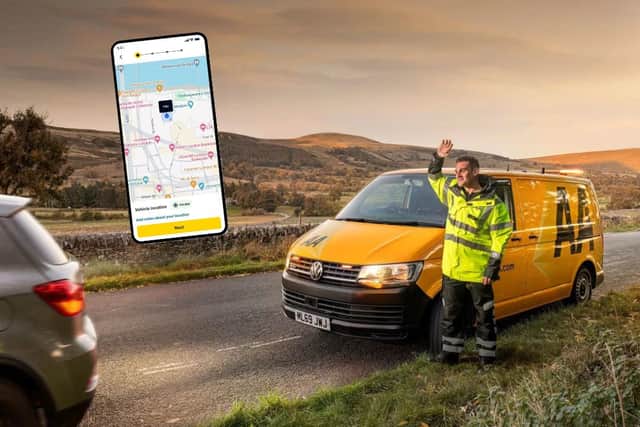
If you’ve ever broken down and had no idea how to explain where you are, the AA app quietly fixes that. It can share your exact GPS location with a patrol so they know where to head without a long phone call. The rest of the app is straightforward, with traffic updates 🚦, fuel and charger info ⛽, and service reminders 🔧. Membership starts from £5.49 a month, though the exact price varies depending on your details.