
Review: Geely Starray
Can the Geely Starray plug-in to Chinese SUVs’ sales surge? asks Tom Sharpe.
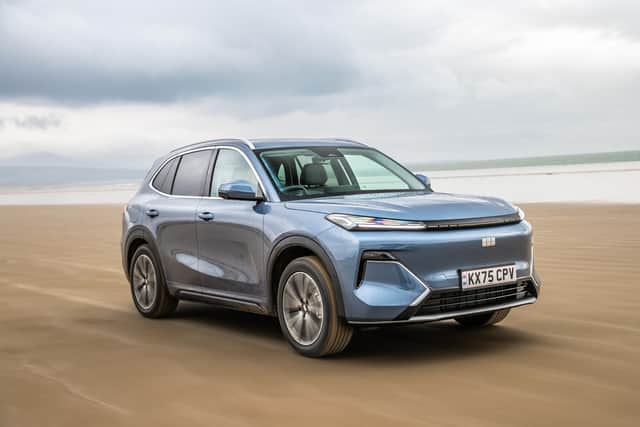
The subtle styling of Geely’s Starray might not stand-out among a new crop of electrified Chinese SUVs but could similarly keen pricing see it become a stellar success?
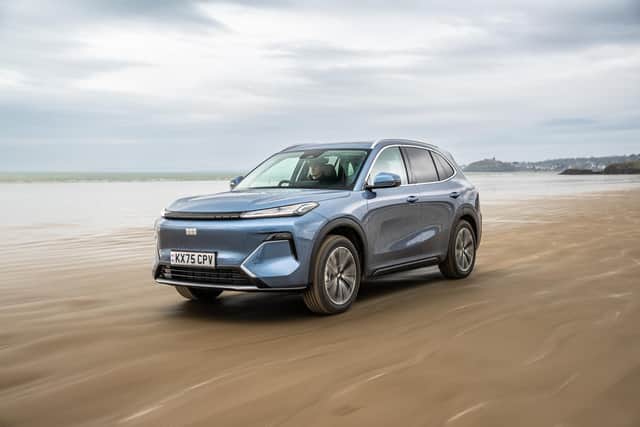

Created by the carmaker that holds major stakes in Lotus, Polestar and Volvo, the Starray is the plug-in hybrid stablemate of the fully electric E5.
It features a 1.5-litre petrol engine and single electric motor, with £29,990 Pro trim and the £32,690 Max tested here featuring an 18.4kWh battery said to be good for an electric driving range of 51 miles.
Upgrade to the £34,990 Ultra and a 29.8kWh battery boosts that range to 81 miles.
At those prices, the Starray significantly undercuts most traditional rivals, its main competition coming from Chinese offerings like the Jaecoo 7, Chery Tiggo 7 and MG HS.
Among the standard kit are 19-inch alloys, LED headlights, heated and electrically adjustable front seats and a 15.4-inch touchscreen infotainment system.
The Max adds a head-up instrument display, 16-speaker Flyme sound system, a heated steering wheel, panoramic sunroof and a powered boot lid.
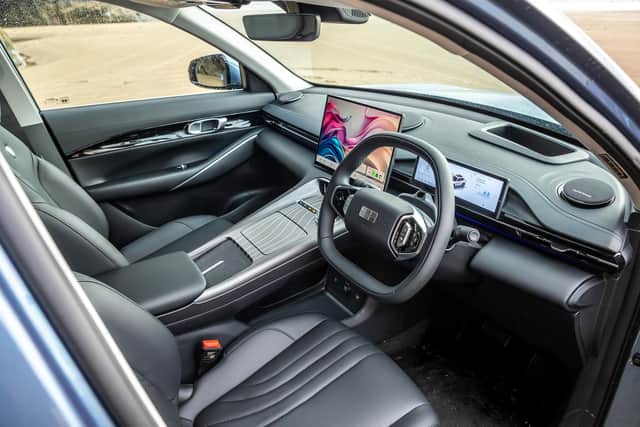
While the Starray’s exterior styling is extremely subtle, albeit there is a whiff of Porsche about its rear end light bar, its cabin gives a positive first impression.
The broad centre console features a grey wood effect trim, neatly adorned with sweeping silver pinstriped detailing, while the faux leather seats are soft and supportive, despite emitting a rather chemically aroma.
Other notable features include a square-edged steering wheel, neat dash-mounted speakers and the crisply rendered graphics of the centre touchscreen.
Get a little closer and the plastics are less tactile than they appear, but the overall look and feel is more premium than the price point suggests possible.
There is also acres of rear legroom and a reasonable 528 litre boot.
On the road, the Starray is another budget Chinese car that fails to excite, the vague responses of the steering and chassis providing no real driver engagement.
Geely claims acceleration to 62mph in eight seconds. However, with charge in the battery, the throttle response can feel a little numb, its reactions delayed.
With the battery depleted, power delivery is more predictable but, now reliant on the petrol engine’s 98bhp, the Starray’s performance is compromised and fuel economy will drop towards miles per gallon in the low 40s.
Furthermore, the driver aids – lane keeping assist and the attention/tiredness detector, in particular – are overly keen, while the infotainment system’s prioritisation of a bird's-eye view of the car at low speeds robs you of the sat nav display at crucial moments.
Overall, though, the Geely Starray is a family-sized PHEV at a very appealing price.
In the current market, that seems to be a recipe for sales success.
Geely Starray EM-I Max
Price: £58,590 (as tested)
Engine: 1.5-litre petrol
Power: 258bhp
Torque: 262Nm
Transmission: single-speed hybrid
Top Speed: 105mph
0-62mph: 8.0 seconds
Economy: 98mpg (WLTP combined test)
CO2 emissions: 54g/km