
Operation Foldyard launched to halt livestock theft in East and North Yorkshire
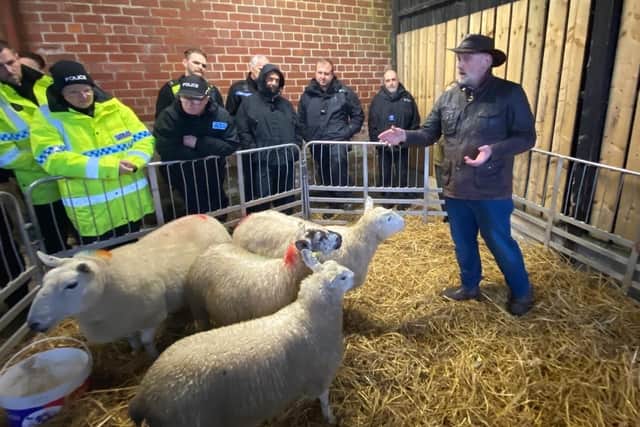
Officers from Humberside and North Yorkshire Police forces have come together for a training event focused on improving their knowledge of livestock theft.
Organised by local farmer and farm watch co-ordinator Stuart Bell, the event at Sledmere House helped officers to understand the motives of livestock thieves and the financial and emotional impact of the crime on farmers.


While often overlooked in comparison to other rural crimes, livestock theft cost UK farmers an estimated £3.4 million in 2024 alone, according to figures from NFU Mutual.
The rising market price of meat has further incentivised thieves, making each animal a lucrative target.
Beyond the economics, the emotional toll of losing animals that are often cared for over years compounds the impact, making it a multifaceted issue.
While cattle, pigs, and poultry are all potential targets, sheep are the most commonly targeted species – with figures from the National Rural Crime Unit (NRCU) suggesting that sheep and lambs represented around 70% of all livestock stolen in 2024.
Sgt Kevin Jones, who leads the Humberside Police Rural Task Force, said: “For many police officers, livestock theft is outside what they normally see in their daily duties.
“Specialised training events like this help build better police understanding of livestock theft and also helps officers to support farmers who have stock stolen to better protect themselves in future”.
The NRCU has launched Operation Foldyard which, as well as improving information and intelligence sharing between partner agencies, will see officers encouraged to develop a greater understanding of livestock farming, including learning about traceability and movements.
Martin Beck, police national livestock theft coordinator at the NRCU, said: “Livestock theft is no longer about single animals being stolen – it can be a highly organised crime involving 50 or more animals being taken in one raid or over time. It can have a devastating effect on farming businesses.
“Some thieves who steal livestock do so with the intention of passing animals off as their own before disposing of them through legitimate livestock auctions and slaughterhouses. But there are also horrific examples of animals being butchered in fields and concerns about the meat then finding its way into the food chain.”