
GPS tracking delivers new insights into Bempton gannets
GPS technology shining a spotlight on one of the country’s much-loved seabirds.
Gannets, Britain’s largest seabirds, are back at RSPB Bempton Cliffs after wintering out at sea.
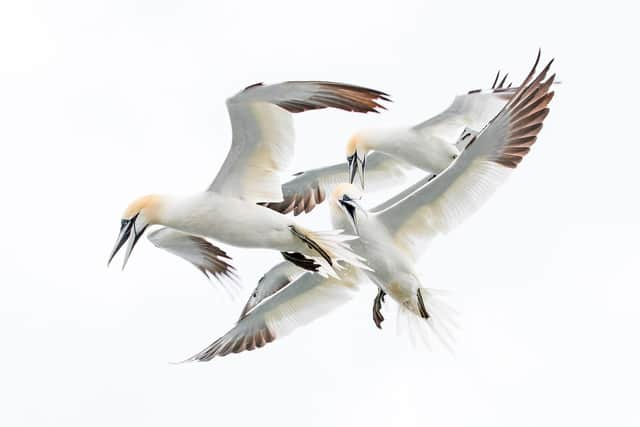

Breeding birds have already arrived back on the cliffs and the younger (non-breeding) birds are on their way back from as far away as West Africa and the Bay of Biscay.
Gannets were impacted by avian influenza in 2022, and with the disease being regularly reported in UK, wild birds there is a possibility of outbreaks in seabirds again this year. However, the hope is that if enough gannets at the colony have some immunity from prior exposure, it might protect against large-scale outbreaks.
Scientists have already discovered that gannets with black irises have survived infection with avian influenza.
This is important because it showed that not all the birds which caught the virus died.
That isn’t the only seabird research taking place at Bempton.
GPS tracking is being used to help conservationists understand where the birds go and what they are doing when they are not at the Bempton colony.
Results of this work show that some breeding birds are reaching as far as the Netherlands on one single journey and are then coming back to feed their chick – this was the longest flight yet recorded at Bempton.
Dave O’Hara, senior reserve manager at RSPB Bempton Cliffs, said: “Every year, when we see the Gannets arriving back, we feel emotional to see them. It’s heartening to see good numbers of pairs at the colony. We’re not out of the woods yet though, and bird flu remains a threat.
“Our visitors travel from right across the UK and overseas to see these amazing birds and we shouldn’t take what we have here on the East Coast of Yorkshire for granted. Doing more to look after our marine environment has never been more important given the range of threats our seabirds face. We are looking forward to seeing the first Gannet eggs hatch late May and watching the chicks grow.
"We’re excited too to see what the results of the GPS tracking will bring over the coming years, learning more about our Gannets’ life at sea.”