
Scheme to improve marine biodiversity launched in Whitby
An innovative project to improve biodiversity and improve marine habitats has been set up in Whitby.
Textured and sculptural concrete panels, crafted by hand with the help of local people, have been created and will be fixed to an area of 25m² of the intertidal zone on the slipway at Whitehall Landing.
The new artificial textured panels will transform the sheer, man-made, concrete sea wall and slipway into new habitats that can be colonised by seaweeds, whelks and winkles and other marine creatures, helping to improve biodiversity in the area.
Over time, intertidal habitats have been lost because man-made structures such as quays and marinas have been built on these important areas.

Groundwork NE & Cumbria is running the scheme, which is funded by the Environment Agency, and other major projects using nature-based solutions to restore diverse habitats in the region’s rivers and estuaries.
Hellen Hornby, nature-based solutions lead at Groundwork NE & Cumbria said: “We are delighted to have worked with these three amazing companies, Artecology, Cubex and Littorina, on what is an exciting, first-of-its-kind collaboration.
"Their combined expertise and unique design skills have allowed us to create an array of different panels producing new artificial intertidal habitats.
“These sculptural forms are like works of art, and involving the community in their construction has been crucial in helping us explain the challenges facing the River Esk estuary and why these features are necessary.
"Participants will soon see their elements on the panels installed at Whitehall Landing, where they will remain and provide a home for wildlife for years to come.
"We hope this will foster a deep, personal connection to this innovative project.
“Developing pioneering solutions to climate challenges faced by our heavily modified rivers and estuaries is a key part of our work at Groundwork, as is involving and engaging local people in the restoration and improvement of their communities.”
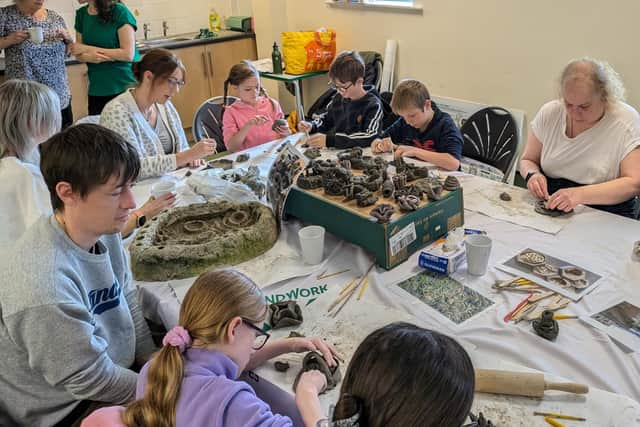
Over the past few months, sculptural bio-receptive elements have been created with the help of local community groups.
Groundwork hosted two clay workshops at Eastside and Green Lane community centres in Whitby to enable families and local residents to help make these artistic clay creations.
The individual sculptural forms have been sent for firing and will be included in the panels for installation at Whitehall Landing.
Once installed the panels and the wildlife that they support will be visible for their designers to see for years to come.
Nigel George, director of Artecology said: “Artecology has enjoyed a longstanding working relationship with Groundwork NE & Cumbria.
"Thanks to them, more of our manufactured Intentional Habitats can now be found in Yorkshire and the north east than anywhere else in the world.
“This latest project is truly groundbreaking, and we’re thrilled to be part of it.
"Through a dream-team collaboration, we’ve spent the past few months combining our collective expertise, skills, and manufacturing techniques to design what I believe is the most structurally complex artificial intertidal habitat ever created."
The project has been organised and delivered with support from the Whitehall Management Company, which owns the slipway and access. Other project supporters include the Environment Agency, North Yorkshire Council and Whitby Harbour Master.