
The RSPB Bempton Cliffs column with Ivan Nethercoat
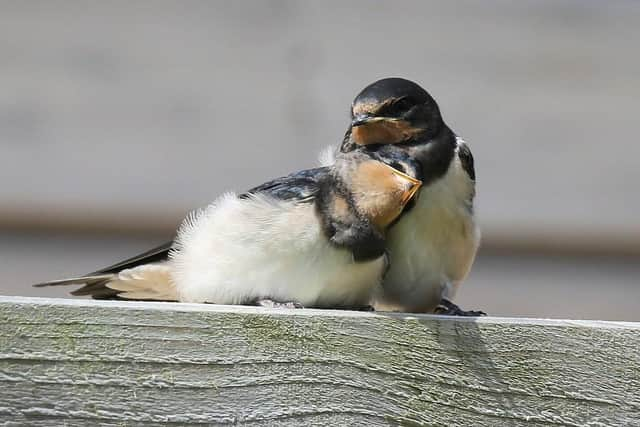
May is a fabulous month here on the cliffs at RSPB Bempton. The seabird breeding season is well under way; swallows are back in the nests they occupied last year after a winter in Africa and the flowers on the grassland are coming into bloom.
Visitors of all ages are coming to see the puffins and children are looking for the hidden letters on the Puffin trail where Red Campion and Cowslips are in bloom.


You may have heard the good news in this paper recently that the ecological case for the closure of industrial sand eel fishing is sound.
The decision to close the fishery was made by the UK Government based on the science provided about the ecological damage the fishery was having.
Industrial trawlers were taking thousands of tonnes of fish for pet food and fish farms, meaning our precious seabirds had less food available.
The productivity of the kittiwakes at Bempton suffered over this period.
But how do we know? The EU court decision was made because of the robustness of the science RSPB provided.
That science is part of the day-to-day work that occurs here over the breeding season and is now well under way.
While we have seasonal staff to coordinate the work and write up the results, over one thousand hours of science is done by people living near Bridlington and Scarborough who volunteer their time to count and monitor birds on exposed cliff edges in all weathers.
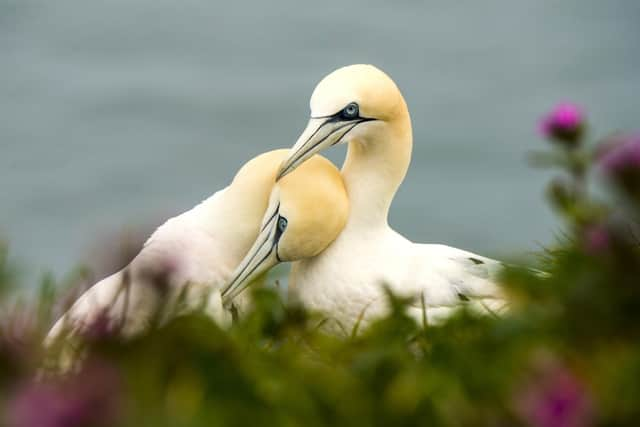
Take Linda, she lives in Scarborough and spends many hours here monitoring gannets. “I have my own ‘plot’ and over the years have got to know the birds well. I record when the first egg is laid, the time of hatching, check progress of the chick and record when it leaves the nest.
Take Angela, she lives in Flamborough and has volunteered at Bempton for over 30 years. She spends many hours here monitoring gannets and kittiwakes.
Angela said: “I have my own ‘plot’ and over the years have got to know the birds well. I record when the first egg is laid, the time of hatching, check progress of the chicks and record when it leaves the nest. In between that we answer questions from visitors.”
These ‘productivity’ counts occur on sections of cliff every year. It’s how we know that kittiwakes have been increasing in productivity over the last three years (the sand eel ban started as a temporary closure four years ago). And gannets have recovered in numbers since the decline in population due to bird flu.
Every five years we count either every occupied nest or, for guillemots and razorbills, every individual bird between Flamborough and Filey. In the case of guillemots that’s 111,925 birds! I’ll update you on this year’s numbers later in the year.
Our gannets and kittiwakes are here throughout the summer, puffins, guillemots and razorbills leave the cliffs by mid-July.
RSPB Bempton in summer is an amazing wildlife spectacle and right on your doorstep. you.
Check out our website for details of events and activities or just pop up for cake, coffee and a stroll.
We look forward to seeing you.