
LANGDALE MOOR FIRE: Focus on mitigating wildfire risk through reducing fuel loads says CLA
The CLA (Country Land and Business Association) has issued a statement in support of fire crews, gamekeepers and farmers who have been tackling the Langdale Moor wildfire – declared a major incident since it started earlier in August.
However, it has also highlighted how risk could have been mitigated by the appropriate land management to minimise fuel loads.
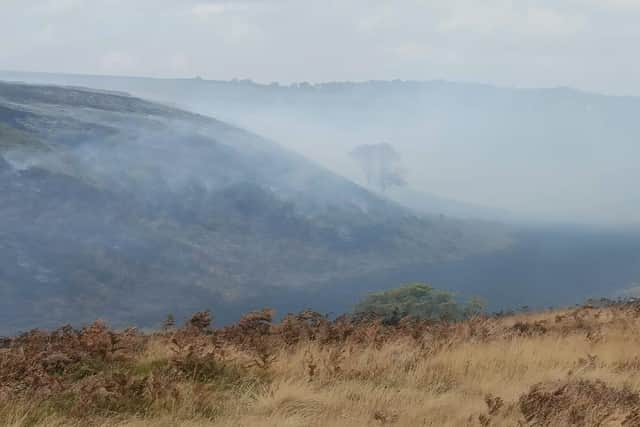

CLA Director North, Harriet Ranson, said: “I would like to highlight the efforts of the fire and rescue services, gamekeepers, farmers and local people who have selflessly put themselves on the frontline in tackling the spread of this devastating fire.
“Land owners are volunteering day and night, using their own equipment, fuel, time and expertise, alongside the emergency services in response to this predicted catastrophe.
“Local gamekeepers and land owners are the experts in upland land management and what they can do to manage fuel loads to minimise the risk of wildfires.
“This includes preventative measures such as prescribed cool burning, creating fire breaks, mowing vegetation and clearing away flammable materials such as highly flammable, dry gorse.”
“It is ironic that those loudly oppose controlled heather burning are not in evidence on the frontline tacking this devastating fire which represents a danger to life, the environment and the livelihoods of people who manage the land.
“Reducing fuel loads is crucial, especially as vegetation growth increases with milder weather.”
CLA member George Winn-Darley, who owns and manages Spaunton Moor in the North York Moors said: “I, along with colleagues, have been involved in trying to manage the spread of this wildfire, along with staff from the fire and rescue services, Forestry Commission, Ministry of Defence and North Yorkshire Council.
“The difficulty in bringing this fire under control is exacerbated by unexploded munitions in the area and flying sparks at times of high wind earlier in the week.
“For the moment, our efforts are ongoing with people’s safety being tantamount.
“Climate change means that heather and other vegetation grows quicker than it did ten years ago, and this results in a greater fuel load which in a wildfire burns too intensely to be able to be suppressed and so burns down to the peat below.
“Around 98% of the North York Moors have shallow peat which, once alight in a wildfire, smoulders underground destroying the carbon store and unique dormant seeds and require much water to extinguish.
“At least two inches of persistent rain would be needed to sufficiently dampen the peat to bring the fire under control.”
“The North York Moors National Park has 52,000 hectares of moorland designated as SSSI,SCA and SPA, with at least 90% managed by moor keepers.
“The largest wildfires in the Park this century, in 2003 and the current Langdale Moor fire, have taken place on the same area which does not benefit from a fulltime, trained, experienced moorkeeper, although the shepherd and contractors do their best to deliver a wildfire resilient landscape within the constraints placed on them by Natural England’s limited consent.
“Once the fire is fully extinguished there would no doubt be lessons to be learnt from it, inclusive of a risk analysis which will likely conclude that prescribed burning and cutting would have to be done more vigorously to greatly reduce the risk of future wildfires of this nature.”