
Peter Taylor: The Scarborough-raised broadcaster in pursuit of a lifelong quest to investigate and explain
Peter Taylor, the renowned BBC journalist and author who for decades has meticulously chronicled The Troubles in Northern Ireland, recently received a CBE for Services to Journalism and Public Service Broadcasting.
Patrick Argent talks to the eminent Scarborough journalist who reflects on his idiosyncratic media career and upbringing on the North Yorkshire coast.

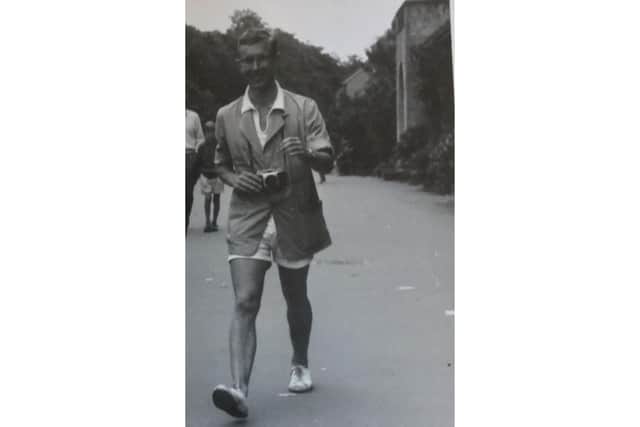
Amid the late 1950’s, the student working the summer holiday in Scarborough’s North Bay Area as a beach photographer and programme seller at the Open Air Theatre, although harbouring an aspiration to be a television reporter, may not have necessarily foreseen that he would become a leading internationally-acknowledged authority on one of the most intensely violent and contentious eras of recent Anglo-Irish history.
A highly familiar and authoritative television presence since the late 1960’s, he has pursued a singularly distinctive career within the media, acquiring great acclaim for his pioneering, definitive and substantive in-depth documentaries on terrorism and political violence.
Most notably, he covered what had been the seemingly interminable armed conflict in Northern Ireland.
Reporter-turned-de facto contemporary historian, Peter Taylor in addition, has authored 10 books, nine of which in direct parallel to his broadcasting career, further analyse the turbulent decades of the troubled province.
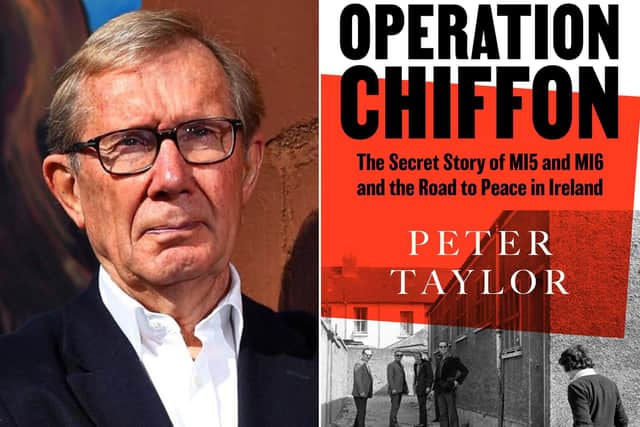
His most recent volume on this most profound subject, published by Bloomsbury last year and titled ‘Operation Chiffon – The Secret Story of MI5 & MI6 and The Road to Peace in Ireland’, formed the basis of the recent BBC2 documentary ‘The MI5 Spy and the IRA’.
By contrast, although similarly a seriously grave issue, his remaining book, ‘The Smoke Ring the Politics of Tobacco’ (1984) focused on the ever-factious topic of smoking, health and the political ramifications of tobacco, once more reflecting the numerous television documentaries he has researched, written and presented.
Both needed protracted and consistent investigation and explanation as the highly confrontational situation developed over the years” he summarised.
Born in Driffield where his father (also an Old Scarborian) was stationed with the RAF during WW2.
During this period his mother worked at the Harbour Bar, a particularly nostalgic place for Mr Taylor which he delights in visiting to this day.
Attending what were then two new educational institutions, Barrowcliff Junior School with his brother John, (who through a shared influence would also become a television broadcaster) and the Woodlands site of Scarborough Boys High School, one of numerous ex-pupils who would later distinguish themselves as eminent figures in their chosen professional field.
“It was an old fashioned, traditional grammar school,” he recalls, “with an old-fashioned headmaster ‘Joey’ Marsden who was both loved and feared.
“I was honoured to be Head Boy. The school was academically strong with a fierce reputation on the rugby field and athletics track.
“The facilities at the new school at Woodlands were second to none. The staff were brilliant and brought out the best in most of the boys.
“Gradually the Girls’ High School were allowed – with permission from the Headmistress – to come to dances with the Boys’ High School.
“These were the great rock ’n’ roll years.
“As Head Boy, I actually once put the rock superstar Robert Palmer in detention.”
Regarding himself immensely fortunate to have spent his formative years in the town, Mr Taylor recalls vivid memories of being a member of the 38th Scarborough Scout Troop, seeing The Beatles at The Futurist (“the noise of the screaming fans drowned out ‘Please, Please Me’ and ‘I Wanna Hold Your Hand’” and attending performances at the Theatre-in-the-Round above the Library.
Potentially alluding to his eventual future career path, he subsequently read Classics, Modern History and Political Sciences at Pembroke College, Cambridge.
On graduation he initially embarked on what would be a short-lived career in teaching, before single-mindedly pursuing his long-held ambition.
Reporting for ITV’s This Week from 1967 onwards, throughout the 70s and subsequently for BBC Panorama during the 80s and 90’s until 2014.
He retired from the BBC in April this year.
His particular niche specialisation in reporting on Northern Ireland over the past half century would emanate from his initial assignment to the province.
“Bloody Sunday in January 1972 kindled my lifelong fascination with the Irish question and how war might translate into peace,” he recalled, “hence the dozens of documentaries and nine books.”
A multitude of prestigious professional awards and honours that include Lifetime Achievement Awards from both BAFTA and the Royal Television Society have been bestowed upon him.
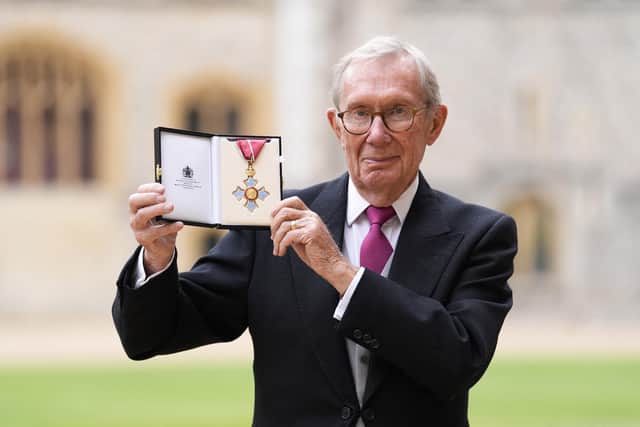
The latest of which being the investiture of a CBE at Windsor Castle by Princess Anne and receiving an Honorary Doctorate from Liverpool Hope University in recent weeks.
Expressly, Peter Taylor’s enduring quest to investigate, understand and explain, helped contribute to a greater climate of awareness of the inherent complex issues within Northern Ireland’s political and nationalistic struggle.
Reflecting on his decades in broadcasting, he stated: “I have been very fortunate to have had a career that in some ways – in particular with regard to Northern Ireland – did help make a difference.
“This being the main reason for my recent CBE for ‘Services to Journalism and Public Service Broadcasting.”
Peter Taylor CBE will be appearing in conversation with BBC Arts Correspondent David Sillito at the 2026 Big Ideas By The Sea arts festival in May next year.