
Scarborough astronomers' advice on where and how to safely watch solar eclipse
Scarborough astronomers Astro Dog are advising people on the best places they can go to see the highly anticipated solar eclipse tomorrow night (Wed Aug 12).
A partial solar eclipse will be observable across the UK on August 12 and will be the deepest eclipse since 1999.
The moon is set to cover around 90 per cent of the sun in parts of the UK - making it a rare event that many people will be eager to watch.
The Royal Observatory Greenwich predicts that the eclipse will begin in London at around 6.17pm, reaching its peak at approximately 7.12pm.
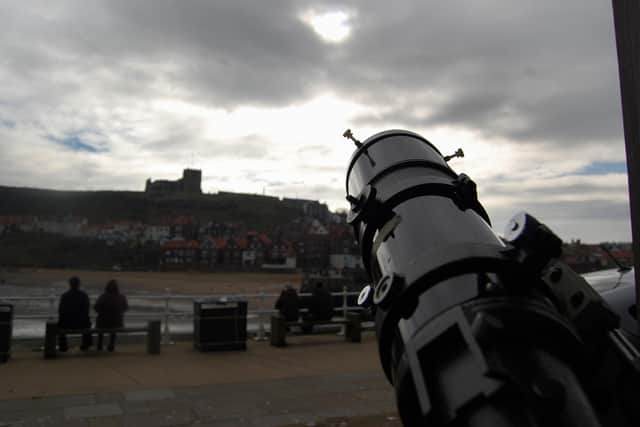

Nicole Carr and Simon Scott run the Astro Dog astronomy business and are regularly seen out and about chasing the Northern Lights and other after dark events.
They said: “As far as the best places to go for the eclipse, the main thing you want is a clear view to the west as at the time of the eclipse the sun and moon will be getting close to setting.
"Elevated locations that can see the western horizon will be best.
"Suggestions include The Castle Headland in Scarborough, Stoupe Brow in Ravenscar, pull-ins near Suffield and Silpho, these are a few places we would consider if we were staying local.”
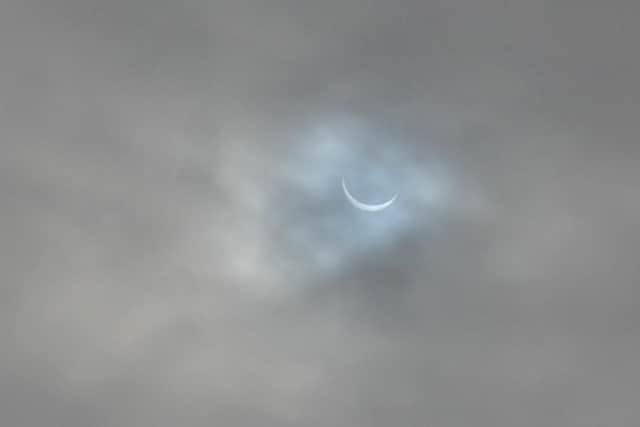
The eclipse will start just after 6pm, maximum eclipse will be just after 7pm and will finish just after 8pm.
“If you are wanting to photograph the eclipse,” they said, “we would make sure to be there extra early in order to practice and make sure you will see the event.
"You will need special solar filter to photograph the eclipse safely.
“Popular, easy to access areas will likely have many eclipse chasers gathering and so even if you are just wanting to view the eclipse with solar glasses or with a pinhole projector, you may still want to head out early to make sure you get a good spot.
“Make sure you have a pair of ISO certified solar eclipse glasses to be able to watch the eclipse directly."
If you don't have any solar glasses there are other ways to safely observe the eclipse.
"You can create a pinhole projector by making a small hole in a piece of card, hold this up to the sun in front of another piece of card and the hole will project a small image of the sun onto the second piece of card,” they said.
"You can also use anything with small holes in to project the eclipse, such as a standard household colander.
"Hold your colander up to the sun and it will project lots of small images of the Sun.
"The next method will create a better image but is harder to do and requires extreme caution - you can use a pair of binoculars or a telescope to project a more detailed image compared to a pinhole projector.
"If you aim your binoculars or telescope at the sun and hold a piece of card behind the eyepiece/s your binoculars or telescope will project a larger more detailed image of the Sun onto your card.
"If you are going to try this method, please remember: NEVER LOOK THROUGH YOUR BINOCULARS OR TELESCOPE AT THE SUN, DOING SO WILL RESULT IN INSTANT, PERMANENT, IRREVERSIBLE EYE DAMAGE!
"The only way to safely observe the sun with binoculars or a telescope is by using special certified solar filters attached to the end of your binoculars or telescope.”
Nicole and Simon also advise you to take sun screen if you intend to watch the whole eclipse – the reason being that you will be under the light of the sun for an extended period of time.
And take a cool drink to stay hydrated too.
“The most important thing is to make sure you stay safe, only view the eclipse directly with certified solar equipment or a pinhole projector, and remember to have fun,” they said.
"Solar eclipses are rare and beautiful events, it will be a very long time until the UK gets another chance to view an eclipse of such magnitude and so make sure you don't miss out on this once-in-a-generation special celestial event!”