
Seals in Scarborough: Here's what you should do if you see the animals out of the water
A large grey seal, nicknamed ‘Bernie’, has been seen hauling himself out of the water to sleep at various locations in Scarborough.
Today (January 14), a second seal, a smaller female, has also been sighted.
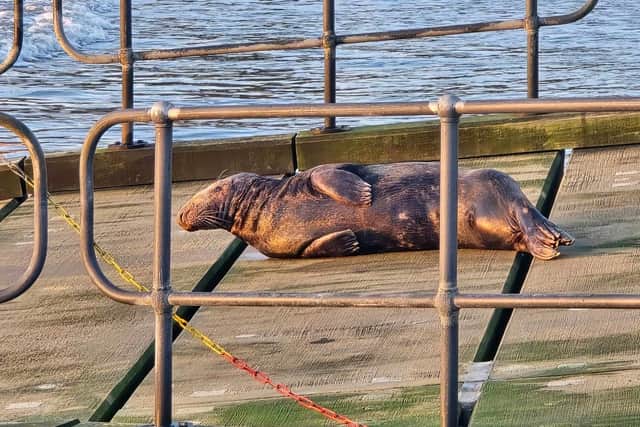

British Divers Marine Life Rescue (BDMLR) a frontline marine mammal response charity dedicated to the rescue and welfare of marine life in distress around the UK, has taken to social media to advise people what to do if they see one of the enchanting animals.
A post on the BDMLR Facebook page read:
‘BDMLR is aware of a large grey seal in the Scarborough area the past couple of days - nicknamed "Bernie"
‘Although underweight, Bernie, an older male, still displays sufficient strength to be able to inflict a severe bite or injury if approached.
‘If you do spot him or any other seal, please provide them with peace, safety, and space to rest.
‘Seals are semi-aquatic, and spend long periods of time laid on their side, chest and even back to rest and digest any food.
‘Old adults & young pups can appear docile, it is vital they aren't approached.
‘If constantly woken up by noise, dogs, or being ushered in to the sea - their vital energy reserves are depleted, leading to a downward decline that can result in exhaustion, and even death.
‘You can help encourage others to keep dogs on leads and to avoid a seal if one is nearby.
‘Advising others to not approach is a small action, but has a huge impact on the mammal that is left to rest.
‘Avoid approaching, touching, putting in water, throwing stones, kicking, hitting, chasing seals.
‘Avoid dogs and children getting close to them too as injuries can easily occur.
️’If you see anyone doing those actions - help be an advocate for marine life and call BDMLR for help.’
BDMLR spokesperson Emily Mayman said: “Seals commonly haul out to rest and digest their food - occasionally will be seen laid on their chest, back or side.
“Their flippers may be held in against their body, and could appear to be reluctant to use one side.
“This is most often normal behaviour where they are reducing the amount of their body on the ground, and will "banana" to rest.
“Young pups on beaches can appear to be quite docile, tolerating people in close proximity and very young pups are naturally drawn to large moving objects, and may potentially follow.
“It's not always easy to spot signs of stress in a seal, so it is advisable to stay at least 50m away from them at all times.
“If you see signs of malnutrition, disease, injury, entanglement or are in any way concerned, BDMLR will send a trained Marine Mammal Medic to assess the pup and if it needs to be rescued.
“If you manage to obtain a downwind position at a safe distance, you should see seals displaying their natural behaviour, which can often be quite comical.
“They are intelligent creatures and it's vital we allow them the peace and safety they deserve.”
To find out more about BDMLR visit the Facebook page at https://www.facebook.com/BDMLRYorkLincs or call 01825 765 546 if you see an animal in distress. Image courtesy Visions Of Scarborough UK, Photography by JB