
The incredible history of Scarborough’s Clifton Hotel where Wilfred Owen wrote some of his poems
The Clifton Hotel on Queen’s Parade in Scarborough, which was once home to First World War poet Wilfred Owen, has entered its 160th year.
Painstaking research by hotel employee of 24 years, Len Friskney, has revealed the fascinating history of one of Scarborough’s longest standing hotels.
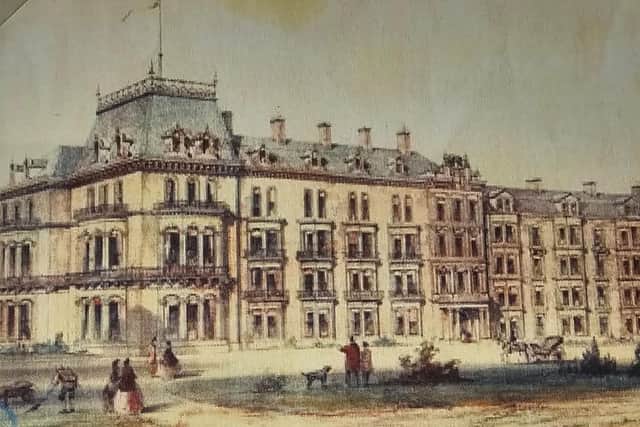

Opened on July 18, 1864, almost three years to the day before The Grand Hotel opened, the Clifton Hotel began life as The Alexandra Hotel.
Originally a much larger building, the hotel originally catered for 200 guests.
A painting by Peter Wells, a member of the Friendly Society of Artists, depicts the hotel as twice the size (possibly covering what is now the car park) with a coaching house at the rear.
The hotel bears the blue plaque from Scarborough and District Civic Society denoting the building's place in history as the wartime home of much-acclaimed war poet Wildred Owen, who is believed to have written several of his poems in the hotel’s top turret window..
Owen fought on the Western Front for several months in early 2017. Badly shell-shocked in April, he was sent to hospital in Edinburgh where he met Siegfried Sasson and began to write poems about the war.
In November 2017, 2nd Lt, Owen was sent to Scarborough with the 5th (Reserve) battalion of his regiment the ‘Manchesters’.
The battalion was stationed at the nearby Burniston Barracks, with the 70 or more officers stationed at the then Clarence Gardens Hotel.
Owen was put in charge of the hotel’s domestic arrangements. He wrote “I am responsible for finding room for newcomers which is a great worry as we are full up. This means, however, that I have a good room for myself, as well as my office!”
In his free time Owen would retreat to his five-windowed turret where he had two wartime luxuries, a comfortable bed and a coal fire.
Owen’s description of his time in Scarborough can be found in his Collected letters (ed. Harold Owen and John Bell, 1967)
During the Second World War, both the Clifton and Norbreck Hotels in Scarborough became home to the Royal Naval School of Music.
It was in these hotels that the Royal Marine Bands were formed and sent to serve in His Majesty's warships where they carried out their musical duties in addition to their active service roles.
The Alexandra Hotel went on to become the Clarence Gardens Hotel and in 1932 The Clifton Hotel.
An advertising flyer for The Clarence Gardens Hotel describes the hotel as “occupying the finest and most healthy position in Scarborough at the extreme end of the North Cliff. Possessing entirely uninterrupted and absolutely unrivalled views in every direction."
The undated flyer also shows that the room rates were 6 shillings (30p) per day from November to Easter 7/6 per day (37.5p) from Easter to July 12 and 8 shillings (40p) a day from July 1 until the end of September.
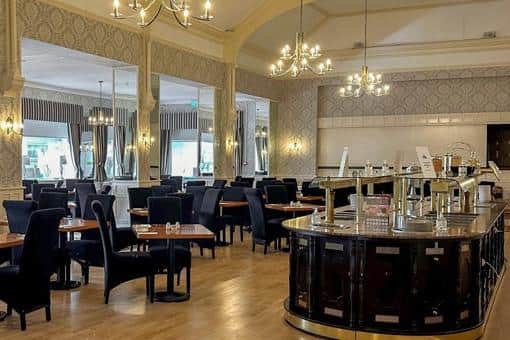
The hotel is steeped in history, with much of the fabric of the building remaining unchanged. The pillars in the dining room are the same today as they were when the hotel was first built.
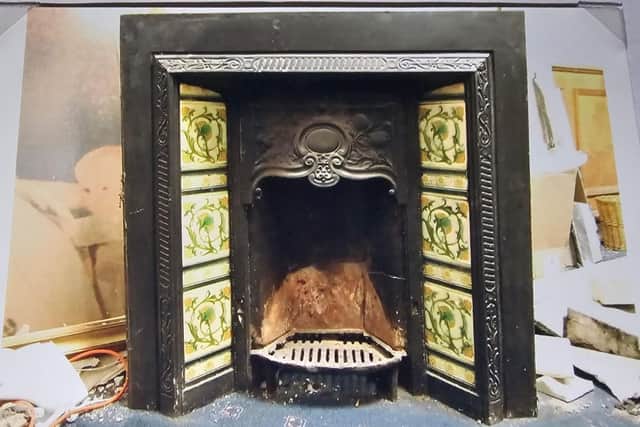
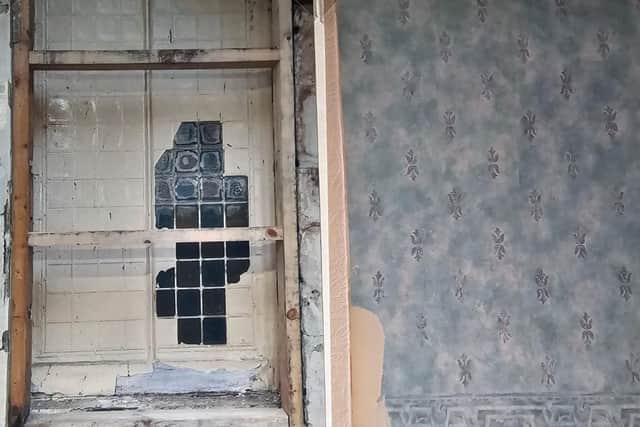
During recent refurbishment works (during which the hotel’s employees were all kept fully employed) a number of treasures were uncovered including a hidden window, fireplaces and long-covered wallpaper.
The newly refurbished Alexandra Suite pays homage to the hotel’s former name and provides the perfect location for current guests to enjoy their dinners.
To find out more about the Clifton Hotel, or to book a stay, visit www.britanniahotels.com/hotels/the-clifton-hotel-scarborough
The Scarborough News would like to thank Len Friskney for sharing his research and photos on the history of The Clifton Hotel, much of which form the basis of this article.