
Whitby Folk Festival celebrates 60th anniversary - a look back down the past six decades
A special anniversary is to set take place this August, as the organisers prepare to celebrate the 60th annual folk festival, now known as Whitby Folk Week.
Here, Joel Chapman – Whitby Folk Secretary, Jill Pidd, Graham Pirt, Doc Rowe, Jenny Pittock and Steve Lowe reminisce over the event’s history.

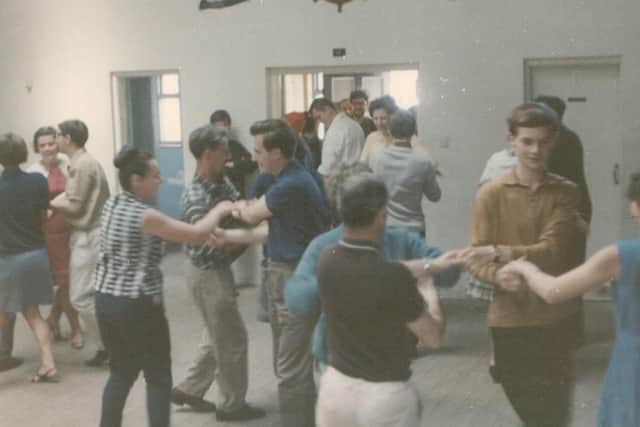
From 1965 and for some years after, the Whitby folk festivals were weekend events, organised by Tony Foxworthy, the North East EFDSS representative.
Those who remember the early festivals recall a Saturday afternoon concert followed by a large ceilidh in the evening, topped up with sing-arounds in the local pubs including The Star Inn, which famously displayed a sign warning “no dogs, no hippies” – resulting in certain ‘folkies’ with long hair being refused entry!

The Mission to Seamen was the main festival venue during these early festivals, and a plaque celebrating the legacy of Tony Foxworthy is proudly displayed in the entrance of this historic Whitby venue.
Those joining the first ceilidh in 1965 danced the night away to the sounds of the Ranters, before beginning the long, late-night walk up to Whitby Abbey campsite at the top of the famous 199 Steps.
The 1970s saw Whitby festival grow and develop into a much larger event, as the festival office moved to Flowergate Hall, with delicious cakes supplied Mrs Rusby’s Kitchen.
Notable performances during the 70s include the Wilsons (before they became the Wilsons!), as well as a streaker who joined Mike Harding on stage in the old Spa Theatre!
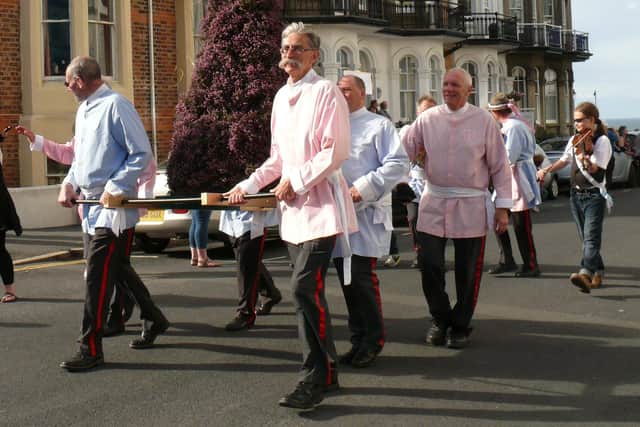
This period also saw the evolution of the ‘Wars of the Roses’ tournaments, in which the Yorkshire team (based at the Star Inn) and their Lancashire opponents (whose HQ was the Elsinore) battle it out in a series of daily challenges, including dwile-flonking, yard of ale contests and eating competitions.
Dwile-flonking is a traditional pub game which involves one team dancing in a circle while the other team attempts to hit them with a beer-soaked cloth (dwile) thrown using a stick (driveller).
Perhaps the most famous Whitby festival competition which began during the 70s is the annual Yorkshire versus Rest of World cricket match, which commences with the winners trophy being presented to Yorkshire team.
Early matches took place on the beach, and those attending remember the aim was always to be batting as the tide came in (anywhere in the sea automatically scoring a six!).
From the late sixties, Grahame Binless ran the festival on behalf of EFDSS.
In 1981, Whitby Folk Week was born, growing the festival from its original weekend form to a week-long (Saturday to Friday) extravaganza, packed with music, song and dance events spread across the town in a wide range of venues – some sadly no longer in use including the Albion, the Big Bamboo and Whitby Yacht Club.
The total budget for “song” events during 1981 was £140, and festival organisers relied on friendships and favours to help attract artists to Whitby.
The 80s also saw the creation of the famous Whitby “Goon Squad”, the logistics team responsible for everything from campsite toilets to transporting chairs and sound equipment around the town – many will remember them pushing around a mobile stage on castors as Johnny Handle sat on top playing the piano!
By the mid-1980s, EFDSS was withdrawing from running its own festivals, and it was then that Malcolm Storey became the sole organiser of Whitby Folk Week.
Supported by a long-serving and trusted team, Malcolm, who passed away earlier this year, transformed Folk Week into the festival known and loved by so many today.
Many artists credit him with helping them get a foot on the ladder by offering them the chance to perform at Whitby, also enabling them to bring their partners and children along to enjoy all Whitby has to offer in the summer holidays.
One key highlight of the 1990s at Whitby was the famous 1992 performance of Peter Bellamy’s Transports, sponsored by Cockersdale.
The star-studded cast put on an unforgettable show in the Spa Theatre.
Despite retiring in 2006, Malcolm returned each year with his partner, Judy, and he remained the ‘face’ of Whitby Folk Week to many people; he will be sadly missed by everyone involved with the festival.
Since Malcolm’s retirement, Whitby Folk Week has been run by a Board of Directors who remain committed to delivering a festival with ‘something for everyone’, and each year ticketholders have access to more than 600 music, song, dance and storytelling events across the town.
Whitby Folk Week remains a truly democratic festival in the sense it doesn’t list ‘headline’ acts, and those attending have a unique opportunity to meet and interact with artists throughout the week, either at one of the festival’s many venues, or simply stood in the queue at the fish and chip shop.
The Whitby Folk Week is on from August 16 to 22.
This year’s special events include Martin Woodford presenting Hull Trawling: when men were men and women changed the world&, Pete Morton’s The Ghost of the Sailors Talking Blues, Shonaleigh & Simon Heywood ‘The Tower of Bagel’, Roy Palmer Lecture 2025 presented by Jon Boden, the 10th Annual Cliff Bairstow Jig Competition, and a series of concerts featuring Whitby Folk Week Artistes through the decades from the mid-60s to present day.
Visit www.whitbyfolk.co.uk for more.