
Whitby Neighbourhood Plan: the need to protect and enhance our heritage for future generations
In the fourth of a series of articles on the Whitby Neighbourhood Plan, we take a look at some of the issues surrounding our heritage and historic environment.
Whitby’s historic environment is one of our most precious assets.
It contributes to our economy, to our cultural identity and to our sense of place, therefore all new developments and conversions must ensure this continues to be valued and celebrated.
The problem
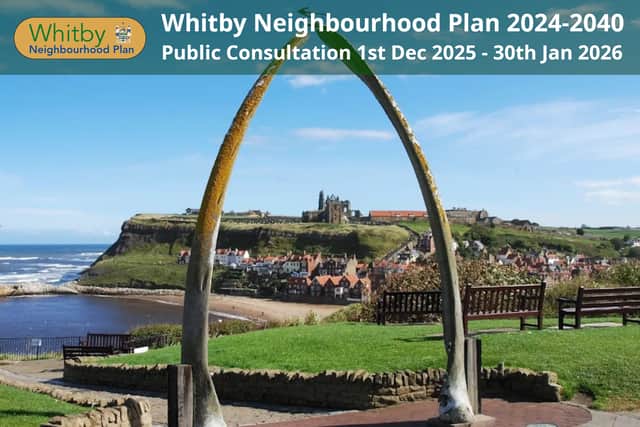

The parish possesses a high quality and varied historic environment, with a wealth of listed buildings and structures concentrated within the historic cores of Whitby and Ruswarp.
This is reflected in their designations as Conservation Areas in 1973 and 1985 respectively.
The Conservation Area in Whitby is 125 hectares, containing 636 listed buildings of which eight are Grade I, 35 are Grade II* and 539 are Grade II.
Much of the Abbey Headland is a Scheduled Ancient Monument and land in front of the Abbey House (Youth Hostel) is listed on the Register of Parks and Gardens.
While Whitby does have a Conservation Management Plan, adopted in 2014, it is still in draft form and has to be read with the report to the Planning & Development Committee 23/01/2014 to be fully understood.
This has led to a number of planning decisions that do not appear to value or enhance our conservation area.
Ruswarp still does not have a Conservation Management Plan.
There are a number of vulnerable heritage assets (Listed and NDHAs) in the parish that need conserving and protecting, not least our piers and lighthouses.
Some Non-Designated Heritage Assets (NDHA) or ‘buildings of local interest’ are included in Whitby’s Conservation Management Plan.
These were originally Grade III listed buildings.
There are many notable local features that are not currently included in this list and, without protection, will be lost. NDHA’s can be identified through a Neighbourhood Plan - this being a positive way for the local community to identify NDHA against consistent criteria.
The proposals
We are proposing the following Neighbourhood Plan policies
•WBY15: Historic Environment – developments must make a positive contribution to its heritage and local distinctiveness.
•WBY16: Unlisted buildings that are important for heritage (Non Designated Heritage Assets) – a list of locally important buildings and structures identified as needing protection, some in an “at risk” state.
The consultation
We welcome your comments. Visit https://www.whitbycommunitynetwork.org/whitby-neighbourhood-plan-draft-consultation/ for more.