
Mulgrave Estate: Shepherd’s hut plan at Sandsend, near Whitby, rejected over highway safety concerns
Plans for a holiday shepherd’s hut, car parking and a shed in Sandsend have been rejected by the North Yorkshire Council as an ‘unacceptable’ proposal.
Robert Childerhouse’s application on behalf of The Mulgrave Estate was rejected by council planners on Thursday, January 23.

The site, which is located on High Row, lies within the development limit of Sandsend and its conservation area.
The grassed former garden is an area of around 300 square metres.
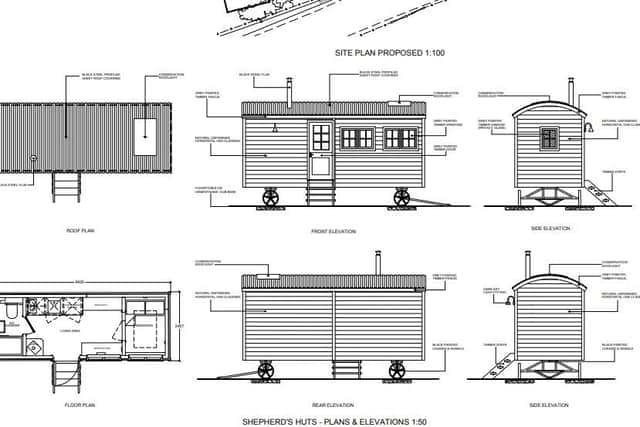
If the scheme had been approved, the shepherd’s hut would have been located near the front of the application site and would have been accessed from the car park area by a resin-bound path leading to timber steps.
The short-term holiday let would have measured around 12 square metres and would have had a bedroom, a kitchen and living area and a toilet and shower.
Planning officers said that despite being visible from some public viewpoints, its design and scale meant it would “fit into its setting and be unobtrusive”.
No objections to the proposal were made by Lythe Parish Council, NYC’s housing Standards team, or environmental health officers.
However, the Highway Authority (HA) recommended refusal of the plan due to “an unacceptable intensification of use”.
It raised concerns that “adequate visibility is not available at the junction of High Row and the A174”.
The HA also said that because of its “insufficient width of 40 to 70 centimetres, the A174 footway at Lythe Bank is unsuitable for pedestrian use which would be likely to be generated by the proposal”.
A report by the planning authority said that due to the position and design of the shepherd’s hut, it would have had “no detrimental impact on residential amenity”.
However, officers agreed with concerns raised by the Highway Authority and said the plan “should be refused on the basis that the proposal does not comply with the highway and pedestrian safety requirements” of the council.
A report concluded: “The existing access, by which vehicles associated with this proposal would leave and rejoin the public highway, is unsatisfactory […] and the intensification of use is unacceptable in terms of highway safety.”