
Whitby Parish Neighbourhood Plan - have your say on Local Heritage List
The following properties or structures have been nominated for inclusion in the Local Heritage List included in the Whitby Neighbourhood Plan.
Local heritage is the identification of heritage assets that are valued by people locally but are not already protected through planning law.
Sites can be objects, buildings, designed landscapes or archaeological sites.
They are known as ‘non-designated heritage assets.’

Sites can be put forward for inclusion by members of the public as well as being identified by the planning authority in the course of their work.
The Local heritage list and/or Neighbourhood Plan non-designated heritage asset list is different to the National Heritage List for England (NHLE) maintained by Historic England, which contains all statutory designated listed buildings, scheduled monuments and registered parks and gardens.
It should be noted that Local Listing and/or Neighbourhood Plan inclusion does not provide any extra planning controls to the asset or change what works require planning permission.
Inclusion of a non-designated heritage asset in a local list and/or Neighbourhood Plan simply makes it a material planning consideration.
This means their conservation is a factor in decision-making at the planning application or an appeal against a planning decision, but it does not impose additional planning controls or affect permitted development rights.
If you wish to comment on the inclusion of any of these buildings or structures in the Local Heritage List/Neighbourhood Plan please refer to the selection criteria on the website https://www.whitbytowncouncil.gov.uk - see Neighbourhood Planning/Supporting Documents to say how the site does/does not meet the criteria.
Any additional historic information or historic images would be welcome.
Comments must be made by January 30.
You can respond by email to [email protected] or to the Whitby Town Council.
All comments received will be reviewed during February and March.
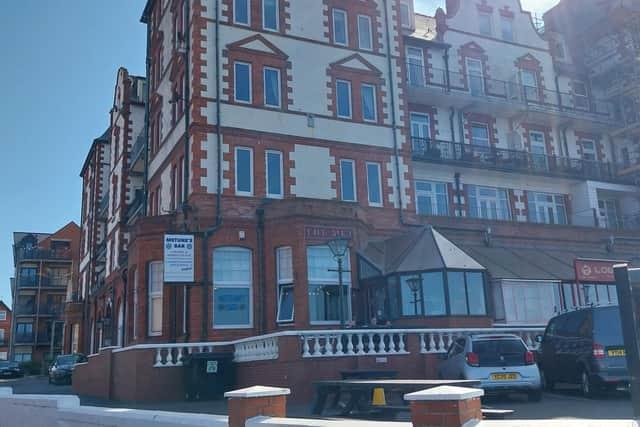
Metropole Towers
The Metropole Hotel opened in 1898, becoming one of the first buildings in Whitby to be lit by electricity.
Its structure externally is little changed from photos of the early 1900s and was one of the most popular community venues for local weddings and big events in Whitby, many well documented by the Whitby Gazette.
It was requisitioned during WWII to serve as a billet for training soldiers.
In September 1942, an enemy air raid descended on Whitby, killing the sentry guard on duty outside the Metropole hotel and destroying over thirty vehicles in the Metropole car park.
The building was converted in the 1960s to apartments on upper floors above a restaurant, ballroom and bars.
Fishburn Park Bye-law Housing
Fishburn Park – named after Whitby shipbuilder Thomas Fishburn - is a mid-Victorian grid pattern housing estate in Whitby.
By the Victorian era, much-needed land for new houses was needed but restricted due to the surrounding large estates of descendants of 18th Century merchants and bankers.
The land was eventually by the Simpson banking family of Whitby, for development in 1853.
The colloquial name for the estate is The Railway, gained due to its proximity to the town’s train station.
Commemorative Plaques
Plaques commemorating events, buildings, and people of importance to the town, including:
Commemoration of opening of the New Bridge (high level)
Mary Linskill
Ammonite Plaque
Henry Freeman Bust
Plaque to Henry Freeman
Church House Foundation Stone
Plaque on Victorian House ‘Arundel Howe’
Whitby Sea Wall Plaque
Town Twinning Commemoration Plaque