
Monmouthshire travel guide: with great food and wine this part of Wales reminds me of the south of France

Sunlight flickers down the lush green wooded valley, alive with the sound of birds chirping and a river crackling over rocks. In front of us are two glasses of delicious dry sparkling wine, shimmering in the beautiful golden hour light.
With the serenity, beauty and, not to mention, the fizz, it feels like we are in the Dordogne or another part of the south of France.
However, in actual fact I am just a few hundred metres across the border from England, in the stunning Wye Valley in Wales, sipping sparkling wine from Devon.
And despite being an area of outstanding natural beauty, it is largely missed by visitors who tend to flock to the Welsh capital Cardiff, Pembrokeshire in West Wales and Snowdonia in the North.
But with its winding rivers and verdant valleys I really do feel like I could be across the Channel in France.
The county town of Monmouth - where the River Wye meets the Monnow - is a busy and bustling place, full of history.
While Tintern Abbey, spectacular 13th century gothic ruins on the banks of the Wye, is great for entertaining all of the family.


But my firm belief is that to understand a place, you have to eat its food, so we have come to the Whitebrook, a double Michelin-starred restaurant with rooms which is known for serving “Monmouthshire on a plate”.
Prior to opening, founder and head chef Chris Harrod spent almost four years working for Raymond Blanc at Le Manoir aux Quat'Saisons, and he says this influenced him profoundly.
“What I thought about food changed completely when I got there,” he says.
“Everything is about quality and the freshness of the produce.
“As a chef it’s all about questioning and tasting, and that’s really stayed with me.”
As well as holding a Michelin star for more than a decade, the Whitebrook is one of only 36 establishments in the United Kingdom and Ireland to be given a green Michelin star for sustainability.
It’s here, while we’re sipping sparkling wine overlooking the luscious valley that Chris walks over to explain his ethos.
“Everything is local apart from the fish and seafood,” he says.

The asparagus, herbs and rhubarb are picked by Chris from the fields above the restaurant, while the hogget - the centrepiece of the tasting menu - is from a farm a few miles away.
The menu changes day to day depending on what is foraged, or what catch is caught by fisherman in Cornwall.
It brings together the ancient practice of people living off their land, with the most refined and modern cooking of any restaurant in the UK.
Even the wine list is littered with Welsh wines, including a pinot noir from Monmouthshire.
The wine pairing includes a number of orange and natural wines, which Chris says “fit with the ethos of the place”.
“Every glass brings out certain aspects of the dishes,” he explains, highlighting the champagne which fizzes with the butter and jersey royal potatoes accompanying turbot.

The turbot is one of the real highlights of the tasting menu, along with the beautifully fresh and smoky Wye Valley asparagus cooked over embers of pine and the huge, fresh Orkney scallop.
And if you have still got room, definitely do not miss the after dinner cheeses, a wonderful array of hard and soft from Wales and just over the border in England.
One of the many bonuses of staying at The Whitebrook overnight - along with the luxurious rooms - is a divine four-course breakfast and coffee on the terrace in the sun.
This included a fresh, tangy and sharp rhubarb compote with homemade yoghurt and granola, smoked salmon and local salami on crumpets fresh out of the oven and the most refined cooked breakfast you have ever seen.

With full stomachs once again we made the short drive to Monmouth, a historic town which has changed hands between the Welsh and the English many times in history.
Now it sits two miles over the border in Wales, with the 13th century Monnow Bridge at its centre.
This is the only remaining fortified river bridge left in Britain, which saw many of the town’s battles, and as such is now Grade I listed.
On a hot summer’s day, the cafes and shops in the narrow streets are busy and bustling, but Monmouth retains its historic and slightly mystical feel.
In the market, a man is selling scythes, while on the High Street there is a shop for witches, and another next door flogging crystals.
Henry V was born in Monmouth Castle in 1386, and saw off the rebellion of Welsh hero Owain Glyndŵr and his band of magicians.
While Horatio Nelson came to the town for wood after his famous victory over the French in the Nile.
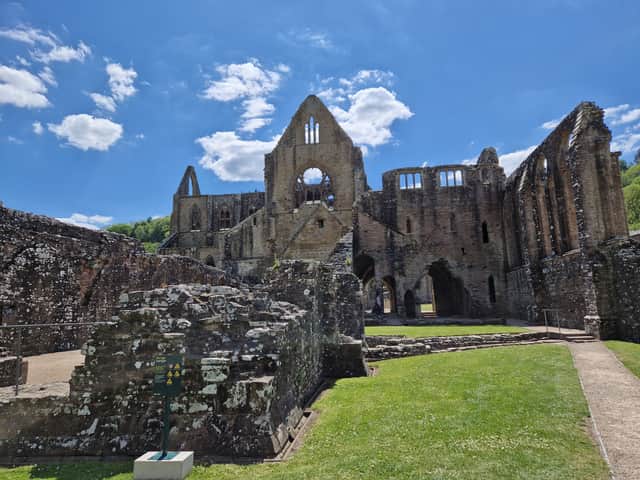
A few miles down the Wye are the spectacular ruins of Tintern Abbey, which was built in 1269 by Cisterian Monks.
However, Tintern was one of the first places to be surrendered to Henry VIII in the dissolution of the monasteries during the Reformation, and since then slowly turned to ruin.
Today, sitting on the banks of the Wye, it is a great place to visit for all the family - with spectacular gothic architecture for the adults and regular birds of prey shows for the kids.
There is plenty of parking and lots of walks around the stunning wooded valley for people of all levels of fitness to enjoy.
Afterwards, make sure you pop into the White Monk Tea Room for some local Welsh ice cream, or the Anchor Inn for a well-deserved pint overlooking the local cricket club.