
I spent three days in Upper Austria - this hidden European gem has a rich history and a strong sense of future

When we land in Austria we’re told by our guide that we’re going to drive for a short while, then walk to a beauty spot and admire the view. Sounds good, we think, although there is a little voice at the back of the head which says: “Ah c’mon, it was an early start, it’s almost dinner time and surely we just need to dump the luggage and maybe have one of your famous Austrian beers?”
Let’s get it on record that you should disregard the nonsense that the little voice comes out with, because that panorama - over the Schlögen Loop - is stunning. It’s the perfect introduction to an area of the country which deserves a much higher profile.
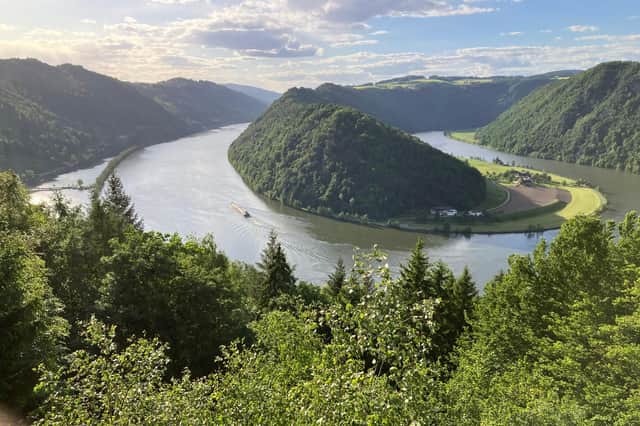

The loop, or the Schlögener Schlinge to give it its much more satisfying native name, is famous, and will probably ring a bell. And our group was, honestly, silenced by the magisterial sight of the huge river bending back on itself, surrounded by rugged hillsides.
We were in Upper Austria (if Austria is whistle-shaped, with the thin Alpine mouthpiece to the west on the Swiss side, then Upper Austria is the northern part of the wide whistle bit, bordering Germany and Czechia). The instant reaction to the Danube is just how big it is, even in the Austrian stretch. It’s not that we’re not used to big rivers in England, but the Thames and the Severn only really widen when they are approaching the sea - even at Windsor Thames is not huge. At Schlogen, there is the best part of 1,500 miles to go until the Danube’s mouth in the Black Sea, and it’s an awe-inspiring sight.
The next day, fortified by schnitzel for dinner, we head out on bikes along the river. We’re on e-bikes, although the level nature of the riverside path means that it would be easy riding even without a bit of help, and in fairness you don’t often feel the electric back-up kick in.
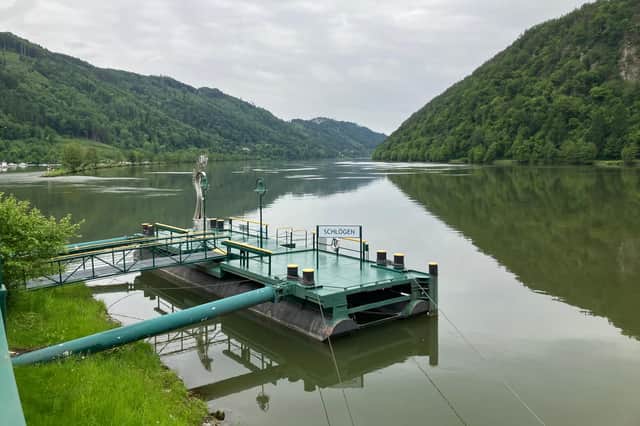
We’re staying at the Riverresort Donauschlinge, which looks out over the loop, and the river path is next to the hotel.
(A quick word on the cycle paths on that stretch of river - superb. For a regular cyclist, to have a smooth, tarmac-ed route that is off-road only in the sense that you need not worry about cars, is wonderful. The surface put many of our roads to shame. It would be perfect for a family trip, and experienced cyclists would absolutely eat up the miles should they choose.)
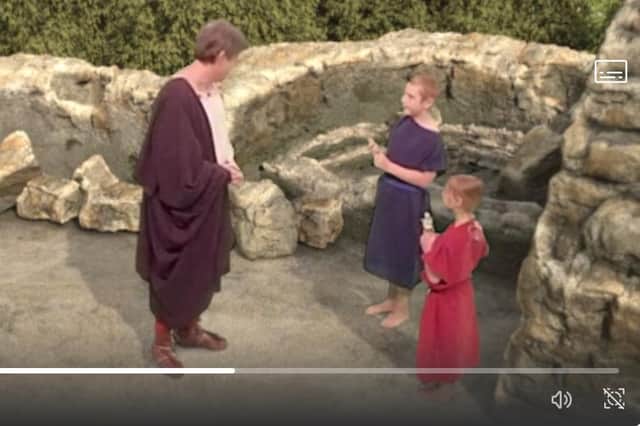
We took it leisurely, heading up river on the west bank, in a north west direction, with regular stops. The stops weren’t due to leg-ache, but to learn about the Roman history of the area, which has been brought to life. The Danube was the boundary of the Roman Empire, and so there are remains of forts along its length, most notably the Unesco World Heritage Site of Roman Burgus Oberranna. There are some wonderful stories connected to this, such as the dramatic fort findings when a petrol station was knocked down. In the modern day, the ruins have been given a virtual makeover with augmented reality - load the QR code, then wave your phone around and the screen will show you what it would have looked like. Brilliantly, wifi is installed there, so nobody need miss out. It’s one of those little moments that make you realise that sometimes the modern world is an improvement.
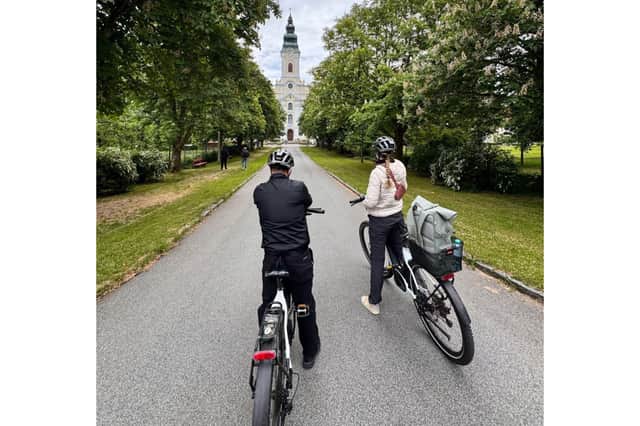
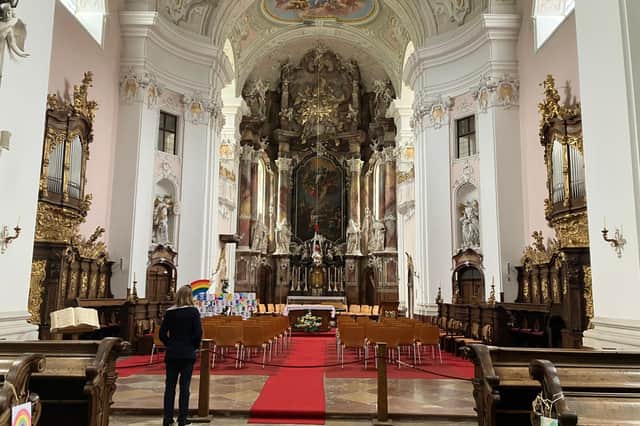
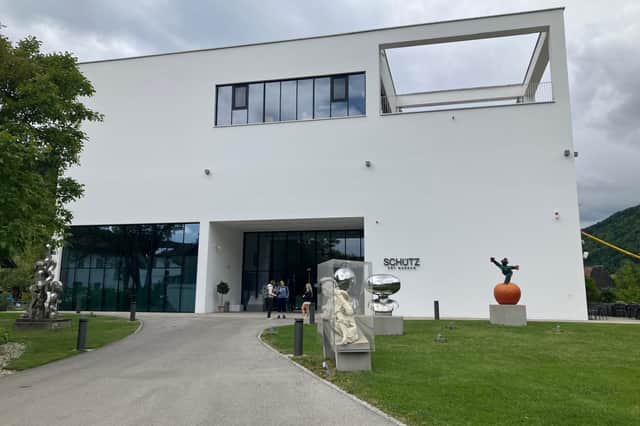
Further down the river, after a stop at Engelszell Trappist Monastery, its awe-inspiring church and refreshing beer, we come across the Schutz art gallery which shows that the Donau is now not an outpost of an empire but of culture, with a gallery established by a construction businessman who wanted to create a lasting benefit for the area. Unlike many galleries, it also has some studios with a rotating cast of artists working in front of the public.
.jpeg?trim=133,0,0,0&crop=&width=640&quality=65)
Heading back down the other bank, we stop at the Gasthof Luger, a restaurant quintessentially Austrian, no doubt popular with cyclists in the summer, and also call in to see the work of a traditional boatbuilder. The ancient skill sits beautifully on the unchanging river.
.jpeg?trim=66,0,67,0&crop=&width=640&quality=65)
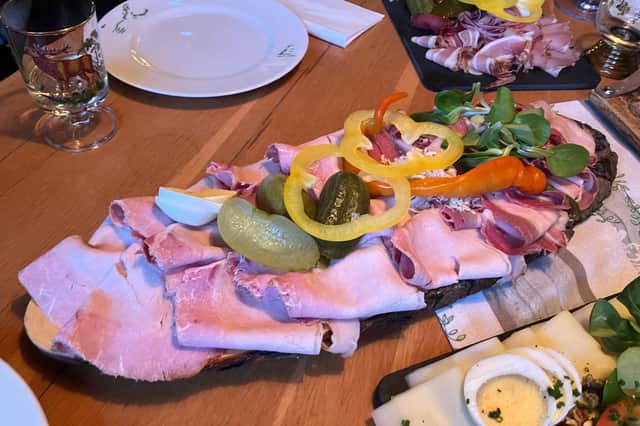
After the trip out we head to nearby Bad Schallerbach, a spa town. We’re staying at the Park Hotel in the centre of town, and a short trip in a taxi to Mostheuriger am Hochfeld which we’re assured is a very Austrian night out. If this is an Austrian night out, count me in. We’re shown to a convivial circular table in the corner, and are brought plates of various cured meats and cheese, with regular top-ups of cider and Stiegl beer. The landlord of the family-run tavern won’t accept platters left unfinished, and insists on cracking open varying bottles of schnapps at the end of the evening, the flavours of which range from paint stripper to “actually very tasty”.
The following morning, another bike ride beckons. This time we’re on an 18-mile loop around Bad Schallerbach, taking in the Magdalenabergkirche and enjoying rolling hills - this time the e-bike motor earns its corn. Our friendly bike guide - every Austrian we meet is just so welcoming - insists we pop into his house as we’re nearby, giving his wife about 10 minutes’ notice. He insists we have an 11am cider as part of the break, explaining that the ‘most’ fairs see local producers bring their wares to sell - and it’s a very refreshing drink. Not for the first time, you find yourself thinking that Austrians have got life sorted.
How to get there, where to stay
Flights:
Flights to Linz from London Stansted with Ryanair from £55 return
Hotels:
- Riverresort Donauschlinge on the Danube from £96 per person per night incl. breakfast
- Parkhotel Stroissmuller in Bad Schallerbach from £96 £96 per person per night incl. breakfast
- Park Inn by Radisson from £85 per room incl. breakfast
General information:
Find out more about Upper Austria: https://www.upperaustria.com/en/
In the afternoon we see another side of Austrian life - the mass sauna. Taking a visit to the EurothermenResort (about £30 for a day pass) , a sprawling complex that includes swimming pools and a water park, it is also famous for its adult-only sauna section, which has more than 40 different saunas, steam rooms and relaxation areas in all.
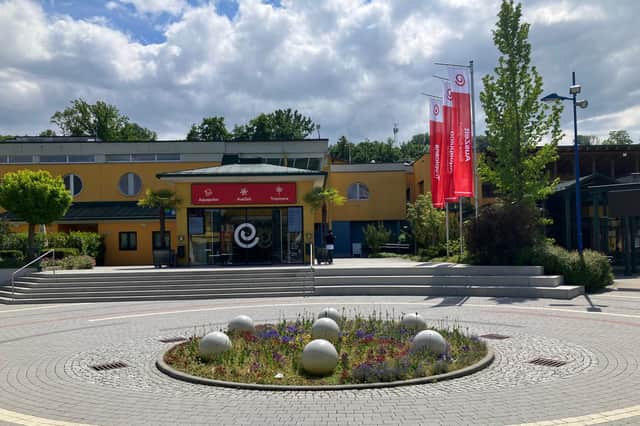
I’m not going to lie, for an uptight Brit, the Austrian custom of entering a sauna naked is a tough one to adapt to. We get ticked off for wearing swimming trunks in one sauna, and realise that if you can’t beat them, join them. One memorable part of the afternoon is a sauna session in a huge former cider barrel. About 50 people are packed in, and when the temperature rises little cups of cider are handed out and then cider is thrown on the hot coals, and the steam wafted around the space by a man waving a giant flag.
Does it lead to a healthier attitude to the human body, and less of a sniggering mindset about nudity? Yes, it probably does. Does it feel liberating? Yes, to a degree. Can I see it catching on in my local leisure centre without police involvement? Not really.
But the concept of spending several hours, and not just a few minutes at the end of a gym session, in a sauna is great. I feel astonishingly relaxed by the end of the afternoon, even with the British aversion to nudity.
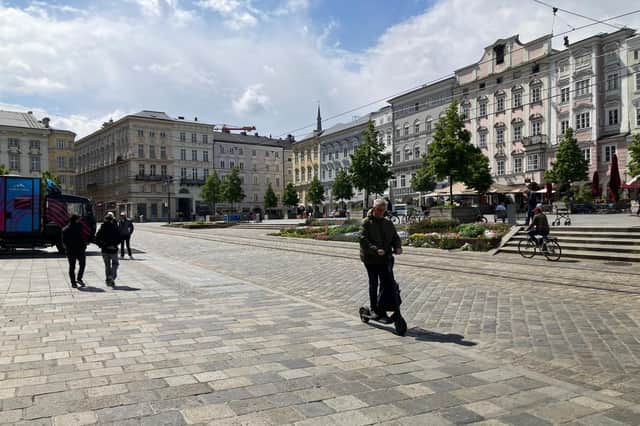
From there we catch a train to Linz, our final destination on a whistle-stop tour. The third biggest city in Austria after Vienna and Graz, Linz has had a bad rep over the years, with its industrial past casting a literal cloud over the city. But just as England’s northern industrial cities like Liverpool, Manchester, Sheffield and Leeds have reinvented themselves while retaining their heritage, so has Linz, albeit it’s much smaller than the above.
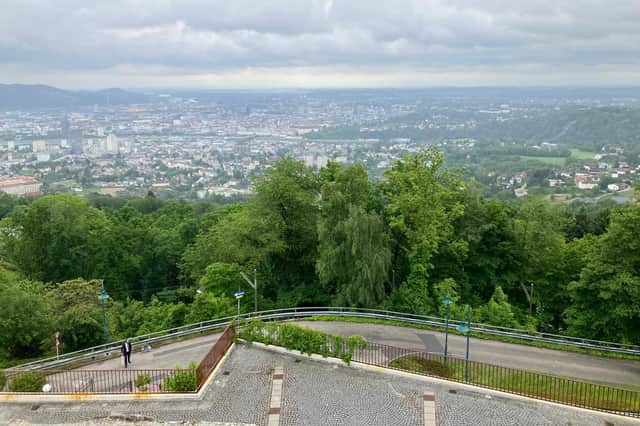
Look under the cover and you find clues that don’t just tell the story of a city, but of a country and indeed a continent.
The castle stands over the town - the site dates from the rule of Charlemagne but various eras have left their mark, it was demolished and rebuilt in 1600 and a huge fire started there in 1800. There’s a good view over Linz - as there is from Pöstlingberg, a hill, where we start our day-long tour. There’s a great view across Linz, really giving an idea of where the city’s steelworks are and how they have shaped the city, but the pilgrimage church at the summit of Pöstlingberg is well worth a visit in and of itself.
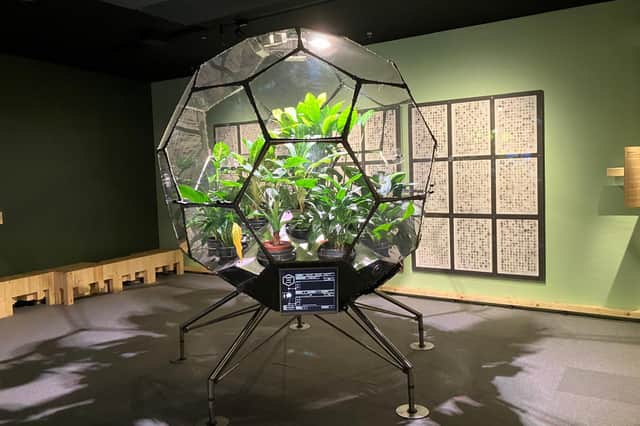
Later, as we walk through the main square, we see the balcony from where Hitler gave his first speech in Austria after the Anschluss in 1938 - a spot from which nobody has since spoken - and we also spend several hours in a wonderful space called Ars Electronica. I use the rather ineffective modern word “space” here because it’s difficult to define.
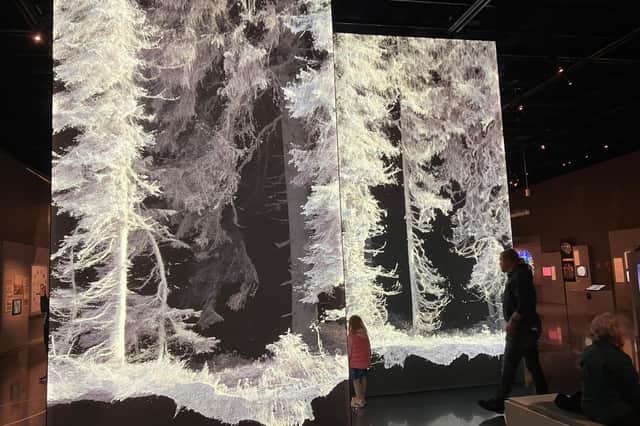
It’s science, it’s art - some of the attractions such as the 3D Deep Space show are visually beautiful - but by goodness a couple of exhibits will make you think, and will stay with you, particularly one about replicating a worm’s neural pathways which seems to have created a basic form of life. And some are visually stunning - the big screen’s megapixel dive into the Bruegel’s painting Tower of Babel shows the artistry and detail in a new light.
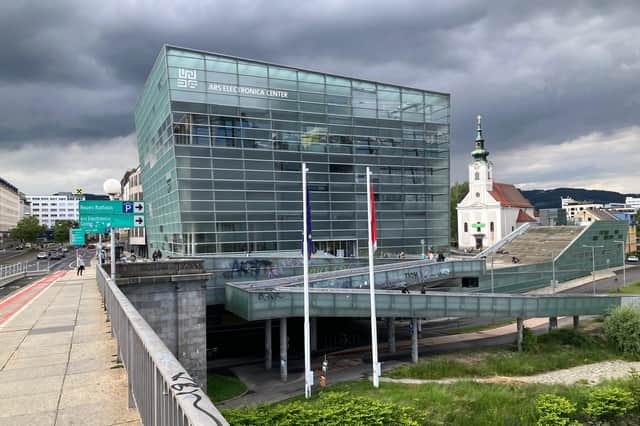
Linz was the final destination on a whistlestop tour. There aren’t many occasions in my life where I have cycled along a major European river, got naked in front of 50 people, come face to face with European history, had a glimpse into a techfuture (and enjoyed delicious food) within 72 hours, but this understated, fascinating area of Austria has it all.