
How to treat an Asian hornet sting: Pharmacist issues advice after a surge in UK sightings

This is how you treat an Asian hornet sting according to a leading pharmacist 🐝
- There has been a rise in confirmed sightings of Asian hornets across the UK.
- The Asian hornet is said to possess one of the most unpleasant stings known to man.
- Well Pharmacy’s George Sandhu advises on how to treat a sting from an Asian hornet.
There have been a rise in Asian hornet sightings across the UK this year, with a leading pharmacist issuing guidance on what to do if you get stung.
Asian hornets are believed to have arrived in France on a shipment from China in 2004. They are an invasive species which pose a significant threat to many of the UK’s native insects, including honey bees.
So far this year, there have been 13 confirmed sightings of the invasive yellow-legged hornet.
In 2024, there were 71 sightings and 24 hives found and while experts do not believe there is an established UK population yet, a DEFRA eradication programme continues this year.
The Asian hornet is said to possess one of the most unpleasant stings known to man, often compared to being stabbed by a red-hot needle.
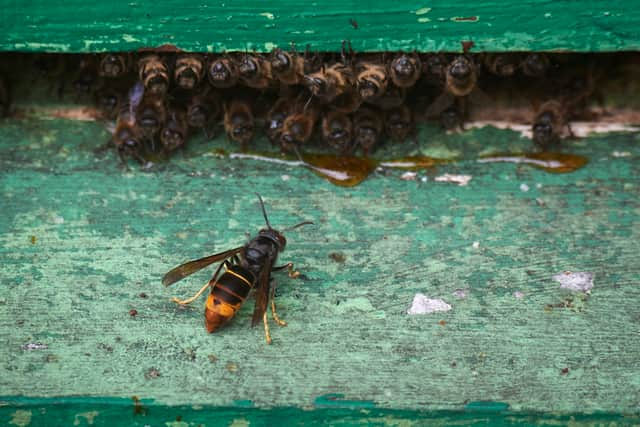

Well Pharmacy wants the public to be aware of how they can treat themselves or others who may be unfortunate enough to suffer an Asian hornet sting.
Under the Pharmacy First scheme, patients can seek advice and treatment about infected insect bites and stings from a pharmacist, without the need to speak to a GP.
Anyone suffering immediate shortness of breath after contact with an Asian hornet or any insect must call 999, while Brits worried about bug bites and stings can go direct to their local pharmacy.
What does an Asian hornet look like?
The invasive species have slight differences in appearance to wasps and other hornets - most prominently, the Asian hornet has yellow legs.
Asian hornets are generally seen as more aggressive than wasps unlike their European cousin and will potentially sting unprovoked.
Where have Asian hornets been sighted?
Asian hornets, have mainly been sighted in Kent with a couple of other sightings in Hampshire and a solitary sighting in Shropshire.
How to treat an Asian hornet sting
If you are stung by an Asian hornet, then Well Pharmacy’s George Sandhu has the following advice which could help alleviate the pain.
Clean with soap and water
A hornet sting is much more painful than normal stings as there is no stinger left behind and nothing to be removed. Mr Sandhu explains: “Instead head for the sink and use soap and cool water to clean the wound, no matter how small.”
Apply ice
After cleaning the wound, applying ice will cool the body’s temperature and slow the spread of the venom. Mr Sandhu says: “The coolness of the ice will also provide a soothing relief to the throbbing pain which comes from an Asian hornet sting.”
Monitor symptoms
If someone has been stung you should keep monitoring the wound and their condition - or make sure someone is around to keep a close eye on them.
Mr Sandhu says: “Some people who are stung by an Asian hornet will find themselves having an allergic reaction following the incident. It is important to consult a medical professional immediately if you believe you’ve had an allergic reaction to an Asian hornet sting.”
Get emergency help
It’s important to get emergency help if you feel your throat getting tight or are having trouble breathing. Mr Sandhu says: “It is possible that you may go into anaphylactic shock.
“It is crucial to ensure that people around you are aware of this so they can ring 999 and get the proper help for you.
“If you’re with someone who is experiencing these symptoms then stay calm and call an ambulance.”
Be one step ahead
If you are aware that you are allergic to bee or wasp stings, then make sure you have your bee sting kit on hand.
Mr Sandhu said: “Having this kit available will allow for immediate treatment which can help save their lives should they be stung by a bee, wasp or Asian hornet.
“The kits are compact and don’t take up too much space and should be a part of someone’s checklist whenever they suspect they may experience insects they are allergic to.”
Pharmacy First
Under the Pharmacy First scheme, patients can seek advice and treatment about infected insect bites and stings from a pharmacist, without the need to speak to a GP.
Mr Sandhu said: “It is also important to remember that pharmacists can offer expert advice on any insect bites or stings through the Pharmacy First scheme.
“If you are looking for medical advice and treatment, then head to your local Well Pharmacy where a pharmacist can discuss options to treat the issue.
“Many patients have the option to purchase antihistamines, steroid creams and painkillers over the counter at their local pharmacy to enable immediate treatment.
“Other treatments can also be offered all without the need for a doctor’s appointment due to the Pharmacy First scheme.”
He adds: “All insect stings and bites can be sore initially however there are a variety of treatments which can aid patients.
“Many patients find that creams are helpful in soothing the area which has been stung whilst others also use soap and water to ensure that the wound is clean.
“Asian hornets possess a particularly strong sting which can be very unpleasant however if patients follow the above guidance they will be able to soothe the sting which should heal in a few days.”
If you have a health story to share with us, we’d love to hear from you. You can now send your stories to us online via YourWorld at www.yourworld.net/submit. It's free to use and, once checked, your story will appear on our website and, space allowing, in our newspapers.