
New research shows that over 90% of IBS-D and IBS-M patients reported a significant improvement when treated with Silicolgel
A new double-blind, placebo-controlled, multi-centre trial published in Neurogastroenterology & Motility demonstrated that over 90% of patients gained effective relief from Irritable Bowel Syndrome (IBS) types IBS-D (diarrhoea) and IBS-M (mixed bowel) symptoms and improved quality of life when treated with Silicolgel, an affordable and readily available over-the-counter liquid oral gel containing silicic acid.
Irritable bowel syndrome (IBS) is one of the most common gastrointestinal (GI) disorders seen in primary and secondary care.

This challenging condition significantly reduces an individual’s quality of life and negatively impacts social functioning and the ability to work, particularly among people with IBS-D and IBS-M.
An open-label, Post Marketing Study published in 2023 demonstrated the safety and efficacy of silicolgel in a real-world setting.
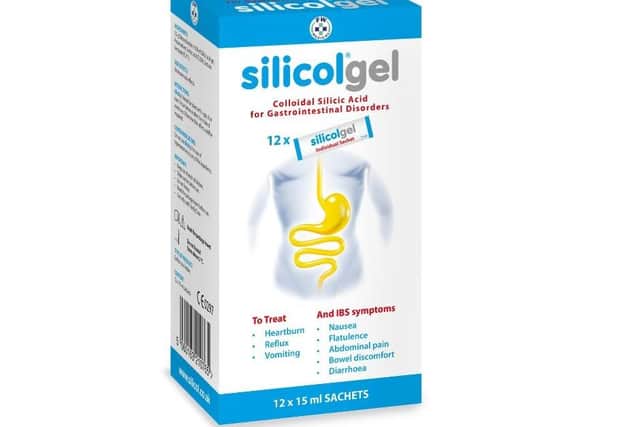
Building on these findings, as well as an existing body of evidence assessing the use of silicic acid based enterosorbents for the treatment of IBS, this clinical trial aimed to evaluate the efficacy, safety, and tolerability of silicolgel in patients with sub-types IBS-D and IBS-M which comprise over 60% of IBS sufferers.
Silicolgel is an established CE certified class II medical device approved for relief of GI disorders, including IBS, and has been marketed in the UK and European markets for over a decade.
Available in the form of an oral gel containing colloidal silicic acid, it coats the digestive tract with a protective lining and adsorbs harmful
molecules acting locally in the gut.
This new trial recruited 120 patients with IBS-D and IBS-M from IBS clinics in four centres. All patients had a confirmed diagnosis of IBS-D or IBS-M according to the Rome IV criteria.
The participants were randomised into two groups, silicolgel (n=60) and placebo (n=60) after comparing patients in both groups for age, gender,
weight, height, BMI, IBS type, disease history at screening, frequency and severity of common IBS symptoms and other associated GI symptoms, and IBS Symptom Severity Scores (IBS SSS).
Patients took 15ml of silicolgel or placebo, three times daily for a period of four weeks. Participants recorded bowel habits, stomach pain, quality of life (QoL) and global symptoms by completing weekly IBS SSS questionnaires and patient daily diaries which were verified by the trial investigators at in-clinic visits.
At the end of the four week treatment period, patients were asked to undergo an additional four week period without medication to determine delayed effects of treatment, and if or when treatment symptoms returned.
The trial set out to achieve a primary outcome of a ≥50 point reduction in IBS SSS after four weeks of treatment.
This is recognised clinically as a significant improvement in a patient’s IBS. In addition, a secondary outcome of a ≥100 point reduction in IBS SSS after four weeks of treatment. All patients completed the treatment phase.
Results
Primary Outcome - A Reduction in IBS SSS score of ≥ 50
After four weeks of treatment 91.67 % of patients receiving silicolgel reported significant reduction of their IBS, compared to just 20% of patients in the placebo group.
88.5% of patients in the silicolgel group suffering from IBS-D type achieved the primary outcome versus only 18.5% on placebo.
For IBS-M sub type sufferers in the silicolgel group, 94.1% achieved the primary outcome versus just 21.2% on placebo.
The Mean IBS SSS score for the silicolgel group reduced from 255.62 before treatment to 92.75 (-162.8) after 4 weeks treatment. The placebo group Mean IBS score did not change significantly after treatment In addition, it was noted that action of silicolgel was rapid with 85% of patients in this treatment group reaching the primary outcome after two weeks of treatment versus 11.67% on placebo.
Secondary Outcomes – Other IBS Measures
Of the silicolgel cohort, 85% reported a ≥100 point reduction in IBS SSS (a large improvement in their IBS) after four weeks of treatment versus 8.3% in the placebo group. IBS-D and IBS-M patients showed the same improvements.
The mean IBS SSS for the silicolgel group reduced from 255.5 (moderate IBS) to 92.7 (Mild IBS), by comparison, the placebo showed no significant change from 254.4 to 257.6. In addition, after four weeks of treatment with silicolgel:
• Frequency of abdominal pain (days suffered in last 10 days) fell by more than half from baseline (5.10 days) to 2.22 days.
• Abdominal pain severity was significantly lower than the placebo group.
• 86.7% reported ≥30% reduction in abdominal pain versus 26.7% for placebo.
• 93.3% reported a ≥50% reduction in days per week with loose stools versus 46.7% on placebo (significant difference).
• The mean number of loose stools experienced by patients treated with silicolgel reduced from 3.95 days per week before treatment to 0.58 days per week after 4 weeks on silicolgel.
• Significant reductions in mean severity scores were reported for abdominal distention (increase in girth), bloating (feeling of fullness) and flatulence.
• Patients reported their quality of life due to IBS significantly improved. All three outcome measures improved with patients reporting via VAS scales* that they were now ‘Very Satisfied / Satisfied Enough’ with frequency of defecation. The impact of IBS on their quality of life had reduced to ‘Does Not Affect At All / Slightly Affects QoL’, and the impact of IBS treatment on their quality of life was rated as ‘Slight
Improvement / Significant Improvement’.
• Other GI Symptoms (Heartburn, Regurgitation/Reflux, Belching, Nausea) in those patients who reported these symptoms, a reduction in symptom severity was observed after four weeks treatment with silicolgel whereas there was no change with the placebo group.
• All 120 patients who received treatments were included in the safety analysis. There were no treatment discontinuations due to adverse events, individual intolerance, or hypersensitivity to ingredients, demonstrating the tolerability of silicolgel and the placebo.
• By the end of week three of the four week no-medication observation period, the mean IBS SSS of the silicolgel group had increased as symptoms returned but still remained below baseline measurements.
Similarly, days with loose stools increased in both treatment groups. Data trends suggest that most symptoms would have returned to baseline levels after four weeks of no-medication.
Recent IBS treatment guidelines recommend dietary advice and regular exercise. Other options include psychological interventions and pharmacological drugs which target the most common symptoms.
Patients with IBS often use multiple medications, and a 2016 survey reported that from 62% of patients with IBS using two or more medicines regularly, only 21% of patients felt confident that their IBS symptoms were under control, and 34% felt that none of their symptoms were under control.
Commenting on the new trial, Peter Whorwell, Professor of Medicine & Gastroenterology at Manchester’s Wythenshawe Hospital, said: “IBS sufferers not only endure a range of embarrassing gastrointestinal symptoms including faecal incontinence, but also experience other problems such as fatigue, joint pains and psychological symptoms such as anxiety as a result of the intrusiveness of their condition.
“Enterosorbents such as dioctahedral smectite and colloidal silicic acid have historically been used for adsorption of toxins and poisons, and offer non-pharmacological alternatives to manage symptoms of IBS.
“Normally classified as medical devices, their effectiveness is considered to be related to a potential muco-protective effect and high adsorption capacity in the gut for irritant substances such as reactive enterotoxins, pathogens and bile acids.
“In this trial, many patients treated with silicic acid gel experienced a significant reduction in the IBS Symptom Severity Score (IBS SSS) with their severity changing from moderate to mild. Their bowel habit improved and they experienced a reduction in abdominal pain, distension, bloating, and flatulence.
“The onset of action in the silicic acid gel group was rapid with some patients reporting improvements after just one week, while the
majority experienced significant improvement in their IBS after two weeks.
“Urgency of defaecation is a common feature in patients with IBS-D and IBS-M which they often rate as their worst symptom. Not surprisingly, it can significantly interfere with both their work and social functioning with some individuals becoming completely housebound.
“Consequently, it is noteworthy that silicic acid gel reduced the number of days where loose stools were experienced resulting in an improvement in quality of life”.
Professor Whorwell concludes: “While enterosorbents are not currently a NICE guideline recommended treatment for IBS, the results from this study add to the body of evidence suggesting that enterosorbents may play an important part in the future management of IBS-D and IBS-M where the current therapeutic options are very limited. In addition, enterosorbents such as silicic acid gel, are not absorbed from the gastrointestinal system and therefore have an excellent safety profile and are well tolerated.
“They also show clinically meaningful improvements in abdominal pain, stool frequency, and global IBS symptoms as well as significantly improving the patients’ quality of life. By alleviating both the physical and psychological impact of IBS experienced by patients, this new study suggests that enterosorbents should be added to the treatment options for IBS-D and M and could also contribute to relieving the considerable economic burden of IBS, with estimated annual direct healthcare costs of £1.3 billion in the UK.”