
Vintage Views with Aled Jones: Brid was the first to have a floral clock
The Victorians invented floral clocks, and their colourful legacy blossomed in Edwardian times.
This fabulous picture shows the ceremony to commemorate the completion of the Floral Clock on the Royal Prince’s Parade, June 1907. There is a huge crowd and a brass band in attendance.
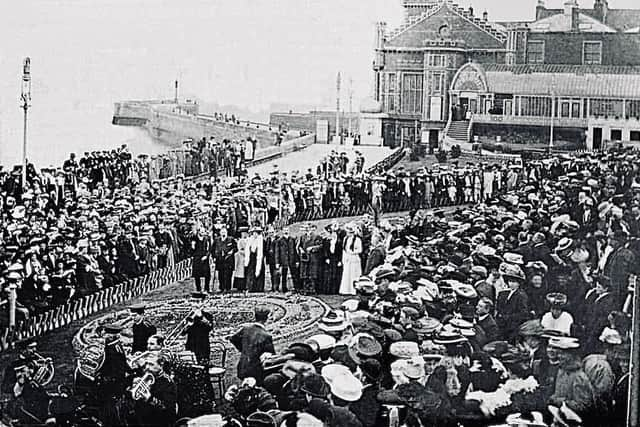

Bridlington was the first seaside town in England to have a floral clock with variegated foliage on the dial and hands. Up to 10,000 plants were involved!
An innovative touch was that a metal throated cuckoo would call the hours and quarters from a bush in the proximity of the Floral Hall. A real crowd-pleaser back in the day!
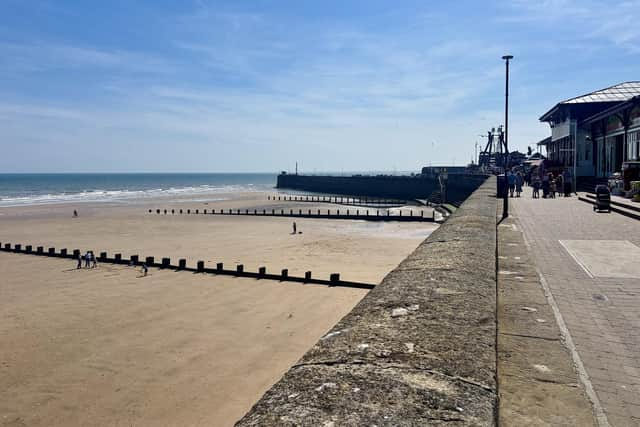
The site is now dominated by the hustle and bustle of funfair rides, in stark contrast to the elegance of smart-dressed people promenading along the Parade while enjoying the gardens.
The photo was taken from the vicinity of Garrison Street and the public building in the background is the Victoria Rooms which was built into Garrison Square in 1847. The arm of the North Pier can be clearly seen in the distance.
This photograph shows the conservatory type extension to the Victoria Rooms which served as the vestibule to then Town Hall from Garrison Street. It was noted for its lunchtime buffets and afternoon teas.
The electrical plant for these multi-functional Rooms was concealed behind the mock castle walls to the right of the image.
Like the Spa Gardens, entrance to the Parade was not free. Daily, weekly and season tickets were available. A domed pay box is to be seen at this end of the seafront.
The other attractions of the Parade included the Floral Staircase, the Floral Carpet, and various 'topiary' birds and animals. On gala nights there were often fireworks and the area was lit up by thousands of twinkling fairy lamps and Chinese lanterns. It was, bar none, the best sight on the entire Yorkshire coast!
The Floral Stairway was an imposing work consisting of over 20,000 plants. A stunning example of carpet bedding, it was erected by the slope adjoining the famous Oriental Café on the Esplanade.
The Parade, with its adjacent Sea Wall, was erected in 1866 and initially just had gardens, summerhouses and a Bandstand.It was extended in 1904 and the Floral Hall was built at this time.
The Parade accommodated 6,000 people and with music provided by the talented Municipal Orchestra backed by top vocalists was terrifically popular.