
Vintage Views with Aled Jones: Chapel Street has a rich spiritual history
For just under 300 years, Chapel Street has served as a mixed commercial and residential road in Bridlington. It also has a rich spiritual history.
Formerly North Back Street, the area derived its name from the years following 1795, when the Wesleyan Methodist Church constructed a stone chapel that was the most beautiful around.

Initially, common moor that was enclosed in 1771, Chapel Street was awarded a spacious layout, comprising six plots of one to five acres.
These plots were soon developed with workshops, corn warehouses, timber yards, and the Rope Walk, where the company of Mr Smedley, a theatrical manager from Lincolnshire, ran a theatre. In 1802 prices of admission were: boxes 3/-, pit 2/-, gallery 1/-.
Established in 1789, Rope Walk was so long that it originally extended as far as where Tennyson Avenue now stands! It was given the name owing to the huge amount of shipbuilding in the town at this time.
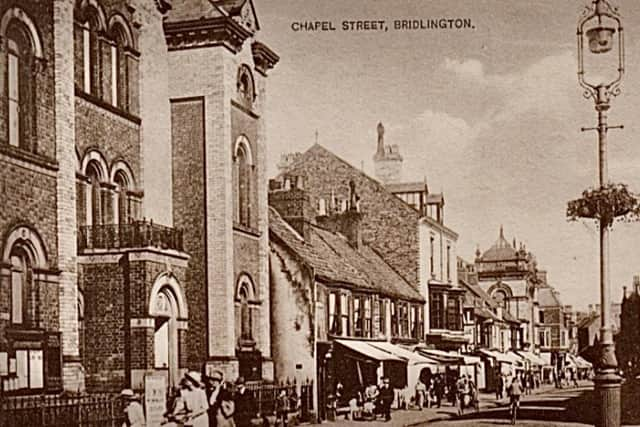
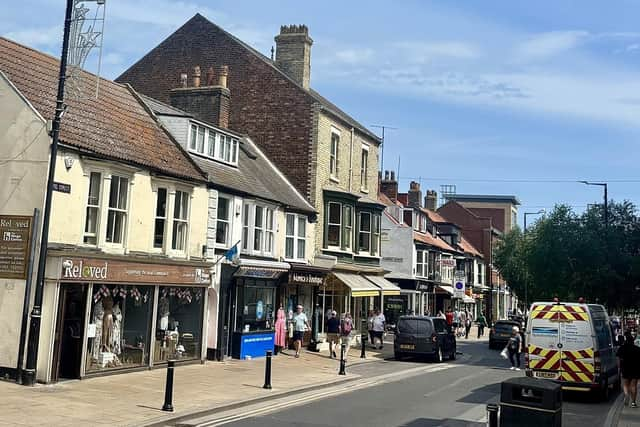
By the era this postcard image was taken (1930s), Chapel Street comprised a delightful architectural mix of large-scale religious structures and smaller commercial and residential buildings, many of which survive today.
Featured in our retro photo is a great view of the street looking towards Cliff Street. It underlines how much and yet how little the area has changed since those days.
The Primitive Methodist Chapel, shown on the left, was built in 1870 to replace a Ranter’s Chapel constructed on the Esplanade in 1833. In 1969 it was replaced by a branch of the Hull and East Riding Co-operative Wholesale Society (now Iceland Frozen Foods).
A few hundred yards up the street is the more imposing Wesleyan Methodist Chapel, built in 1873 to seat 900. William Botterill of Hull was its architect. One of the finest examples of Neoclassical architecture ever built in these parts, it was razed to the ground on 31st October 2004, a sad loss to the town.
In the 1930s a wide variety of shops included: Burberry, ironmongers; Watsons, dairy; Coverdales, tea rooms; Liza Baron, fried fish saloon; G Walkington, fish and game.
In the distance on Cliff Street the outline of the Burlington Hotel can just be distinguished. Readers may notice how little the upper storey has changed, even to the name sign on the end of the building.