
Vintage Views with Aled Jones: Paying to walk along the Promenade
Just like Prince’s Parade, the Spa charged a gate fee and this postcard shows the south entrance in 1914.
Admission at the time was 2s 6d per week or 6d per day.
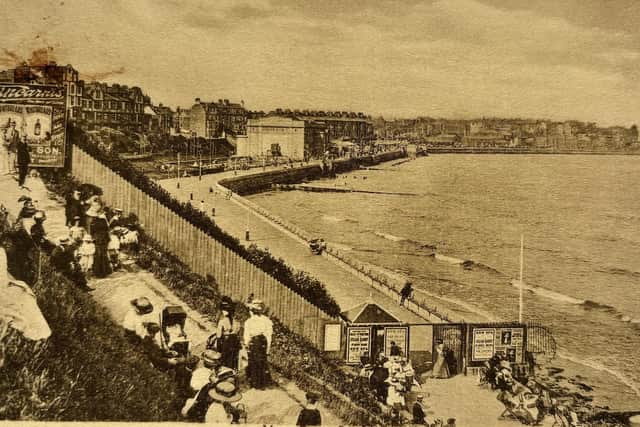

Guests had access to the promenade, a theatre and the ‘glass dome’ for concerts, the latter also housing a café and shops selling a wide variety of fancy goods, fruit and flowers.
These attractions were built by Messrs. Whittaker of Leeds in 1896. The Corporation bought the Spa in 1919 for £16,000 and extended its seawall as the Princess Mary Promenade in 1925-1928.
The hoarding on the left advertises Wincarnis tonic wine (made with extract of beef!) and Whitbread’s London stout. It shows that drinking was a key part of the entertainment!
The Edwardian era was not as ‘straight-laced’ as some might think. Indeed, the Edwardians, like the folk of today, lived in a society geared towards alcohol consumption.
Here is a glimpse of the fashions of the time: the ladies mostly wear straw hats trimmed with flowers or chiffon, whilst the men are very smart in their summer suits and fedoras.
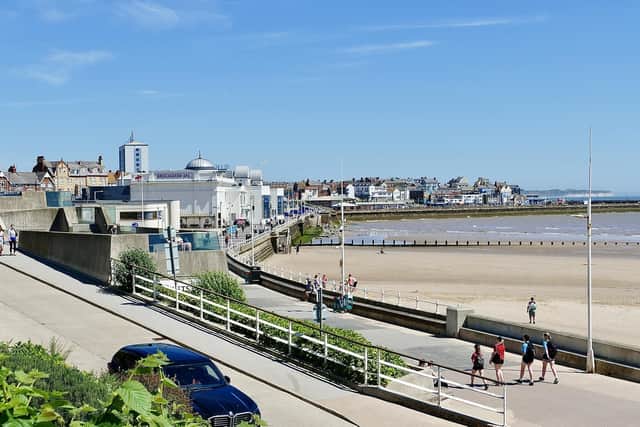
Note how the Spa is a much greener, pleasanter place than it is today. The grassy slopes and planted borders in the image are now consumed by volumes of drab concrete.
The gardens were separated from the theatre by a boating lake which was fed by a Mineral Spring situated to the west of the quay and said to have curative powers.
The most important aspect of the Spa complex was the music. The notices outside the pay kiosk invite you to a twice daily performance by Julian Kandt and his continental band. People travelled from miles around to come to here and listen to dazzling waltzes by moonlight.
Some of the best musicians of the day, Kandt and his orchestra had played for King Edward and Queen Alexandra's 40th wedding anniversary in 1903.
Austrian-born Kandt was famous for his trademark waxed and curled moustache, remaining as musical director at the Spa until illness stopped him performing in 1917.
At the end of his first season, in 1910, Herr Kandt was presented with a gold medal and a silver cake stand for his part in reviving the fortunes of the New Spa.
This historic card is post-marked June 1, 1914, and carries the message: ‘Having a good time here, weather fine but dull at intervals’.