
Vintage Views with Aled Jones: Plane story brought to life
Postcards are a powerful resource. They connect us to our past and the remarkable personalities who have helped shape the present.
Early picture postcards were the Edwardian-era equivalent of text messaging or an e-mail.
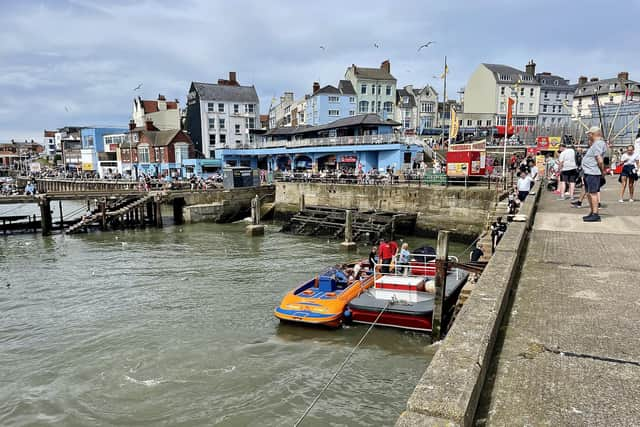

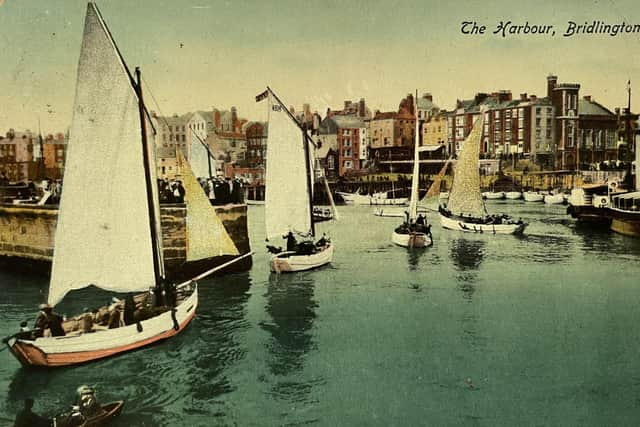
This hand-tinted one is as interesting for the message on the back as for the actual scene itself.
It reads: “There is a man flying an aeroplane here today, he came from Harrogate yesterday in it.”
Postmarked August 26, 1913, the message is certain to refer to one Harold Blackburn, who gave exhibitions and passenger flights around Yorkshire in a Blackburn monoplane (80hp Gnome).
Harold Blackburn, dashing pilot, was one of the pioneers of Edwardian flying, and was involved in air combat in WW1. After his famous ascent to 6,000 ft at Bridlington on August 17, 1913, accompanied by nine-year-old Isla Tudor, he flew back to the town eight days later, arriving just before dusk.
Mr Blackburn landed in a grassy field behind Carr Lane (now Sands Lane) and was met by the mayor and mayoress, with a large crowd gathered.
To quote an article in The Aeroplane, titled Flying at Bridlington, and published on Thursday, September 4, 1913:
“Each day of the week he took up a number of passengers, and, on two occasions, he went to Filey and landed there in front of the hangar.
"On Saturday, after taking several passengers in the morning, he started off after lunch, with Dr Christie as passenger, for Leyburn, a distance of about 75 miles, where he was booked to give an exhibition, arriving there 70 minutes later.”
Many residents and visitors don’t know the town’s powerful association with early aviation. They are quite unaware of the connection with Harold Blackburn, Isla Tudor and Jack Brereton; the latter flew Bridlington’s first aeroplane, making several flights over the seafront.
It is amazing to think that Bridlington boasts a record-breaker in Isla, the planet’s youngest aviatrix.
Did you know that American-born Isla lived in the town for several years with her father who was Spa manager?
Sadly, Isla died from flu at age just 12; but she’ll forever be remembered as the girl who, quite literally, ‘rose’ to fame here in Summer 1913.
I wonder if Isla ever had a sail on one of the cobles in our hero image. Aren’t they a beautiful sight?