
Scarborough A&E waits more than double York’s, NHS figures show
Patients attending A&E at Scarborough Hospital are waiting significantly longer than those treated at York Hospital, health leaders have been warned.
21 per cent of patients at Scarborough’s emergency department spent more than 12 hours in A&E, compared with nine per cent at York, bosses at the York and Scarborough Teaching Hospitals NHS Foundation Trust have been told.
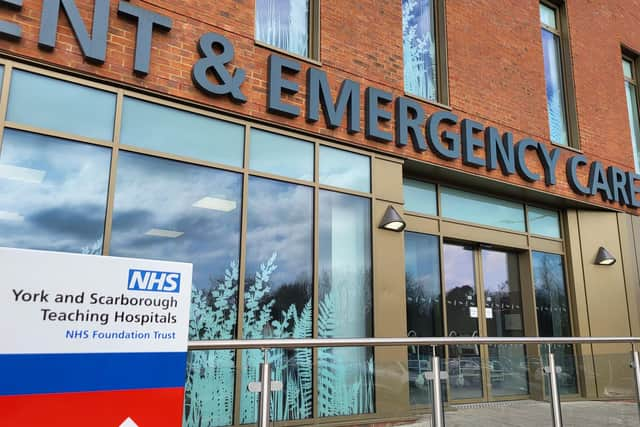

The Trust-wide figure stood at 13.9 per cent in September, against a target of five per cent. In August, 14.6 per cent of A&E attendances at the two hospitals resulted in a wait of 12 hours or more.
At a Trust board meeting on Wednesday, October 28, health bosses acknowledged continuing pressures on emergency services as the organisation heads into winter.
A board report said Scarborough’s poorer performance was linked in part to difficulties recruiting and retaining senior medical staff.
It stated that “the proportion of patients spending over 12 hours in ED is higher in Scarborough (21 per cent) than York (nine per cent)” and highlighted “the challenge in senior medical cover at Scarborough which drives long waits”.
“Short-term funding has been agreed to support with this, though uptake of additional shifts is limited.”
The Trust has said it is “committed to reducing long waits and eliminating corridor care” and that it was working on a range of measures to improve performance, including a “coming off corridors” programme, improvements to patient flow and efforts to increase senior medical cover.
A spokesperson recently said: “We are working closely with our health and care partners to improve patient flow, including supporting earlier discharge, making best use of available beds and strengthening same-day emergency care.
“These actions are helping to reduce long waits, including 12-hour trolley waits.”
A business case is also being developed for additional medical staffing.
Health leaders said that emergency departments continued to experience periods of very high demand concentrated into short periods of time, creating additional pressure on staff and patient flow.
Despite the continuing challenges, managers said a number of improvement programmes remained underway, including work to reduce corridor care, improve patient flow and strengthen same-day emergency care services.
However, senior leaders acknowledged that while a significant amount of improvement work was being carried out, the benefits had not yet been consistently reflected in headline performance measures.
During Wednesday’s meeting, executives said there was evidence of progress across a number of operational priorities, but admitted this had not yet translated into sustained improvements in some key targets.
The discussion also highlighted the importance of reducing delayed discharges and improving patient flow through hospitals.
Leaders pointed to the introduction of discharge command centres at both York and Scarborough hospitals, bringing together NHS and social-care partners to identify and remove barriers preventing patients from leaving hospital when medically fit to do so.
The Trust’s latest winter planning assumptions have already identified a gross bed gap of 32 beds at Scarborough Hospital and 52 at York Hospital before mitigation measures are taken into account.