
CLA calls for Government action to help minimise wildfire risks on North York Moors
The CLA (Country Land and Business Association) is calling on the Government to change licencing policies to allow land managers, farmers and moor keepers to continue their efforts to prevent and mitigate wildfire risks
The current spate of wildfires natinolly – and last year’s widespread blaze on the North York Moors – are a stark reminder of how climate change is threatening rural areas, and how government policy is not supporting adaptation.
Wildfires affect all parts of the country, including croplands, heathlands, grasslands, and woodlands, with the largest fires occurring on upland moors.
These are threats to rural communities, farm businesses, wildlife, and critical infrastructure, and can release centuries of accumulated carbon.
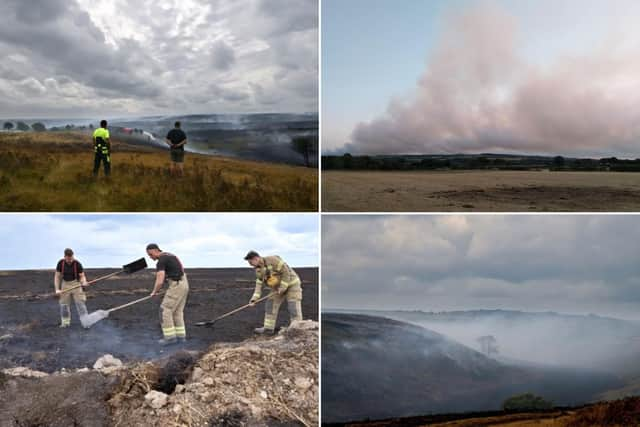

The CLA is calling on government to simplify the licence application process to enable land managers and gamekeepers to undertake controlled burning.
This action, in addition to grazing, mowing, and removing vegetation, helps to decrease fuel loads, which greatly reduces the risk and ferocity of wildfires.
Controlled burning is an essential tool, which land managers have carried out for centuries, and which does not damage peat when well-executed.
However, as a result of legislation amended last year, land managers across the full upland area of England must now apply to Defra for a licence if they need to conduct controlled burning on deep peat sites.
Additionally, anyone wanting to conduct controlled burning in a protected site must apply to Natural England for a separate consent.
Both these licences are extremely difficult to obtain.
As a result, land managers, farmers and gamekeepers can no longer carry out their long-standing preventative actions that minimise fuel loads and greatly reduce the risk and scale of wildfires.
CLA member George Winn-Darley, who owns and manages Spaunton Moor in the North York Moors, said: “I, along with colleagues, was involved in trying to minimise the spread of last year’s Langdale wildfire, so we have first-hand experience about the devastation it causes.”
“Local gamekeepers and land owners are the experts in upland land management and what they can do to manage fuel loads to minimise the risk of wildfires.
"This includes preventative measures such as prescribed cool burning, creating fire breaks, mowing vegetation and clearing away flammable materials such as highly flammable gorse.”
“Defra continues to view controlled burning as a ‘last resort’ option.
"We strongly dispute the scientific basis for this. Controlled burning is the only reliable, proven method other than grazing that moorland managers have available to control moorland vegetation fuel loads. Land managers should remain able to choose when they use it.
“Year-round milder weather means that heather and other vegetation grows quicker than it did ten years ago, and this results in a greater fuel load which in a wildfire burns too intensely to be able to be suppressed and so burns down to the peat below.
“The North York Moors have shallow peat which, once alight in a wildfire, smoulders underground destroying the carbon store and unique dormant seeds and require much water to extinguish.
"At least two inches of persistent rain would be needed to sufficiently dampen the peat to bring the fire under control.”
CLA President Gavin Lane said: “We know that careful and controlled burning, done in the right place, at the right time of year, can help make fires less likely to happen and easier to control.
"But the system now required to apply for a licence to burn is too complex, time consuming and unwieldy that, in practice, is counterproductive.
“We know that climate change will make wildfires more likely, more dangerous and more difficult to control so we need every tool available to prevent this escalating problem.”
Gavin thanked the farmers and landowners who have stepped in to help local fire services in creating fire breaks during the recent outbreaks of wildfire.
"However, they need to work more closely with local authorities to map the likely risk of wildfires and devise a year-round strategy to deal with them,” he added.
The CLA is also reminding landowners and managers to maintain fire breaks and have water bowsers ready in case of emergency.