
Remembering Whitby’s first female minister, Ethel Kay
Whitby’s first female minister of religion was inducted at the small Unitarian Chapel in the town 99 years ago, on September 22, 1927.
Rev Ethel Kay has been almost forgotten today, but she was an energetic worker for world peace and education for young and old alike.
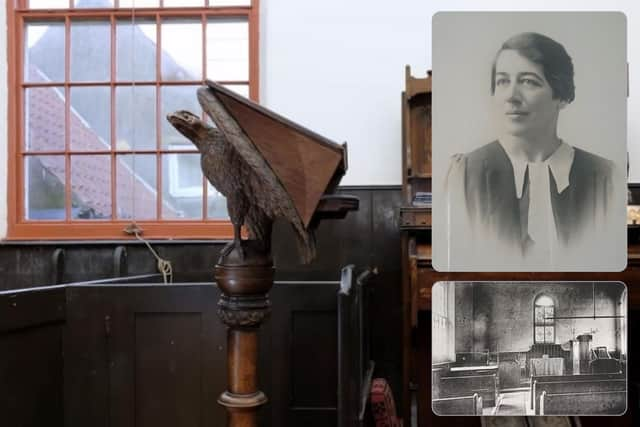
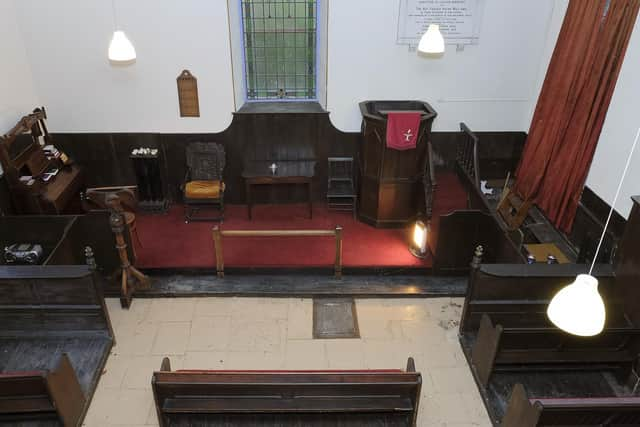
Tucked away behind a green door on Flowergate is a hidden gem.
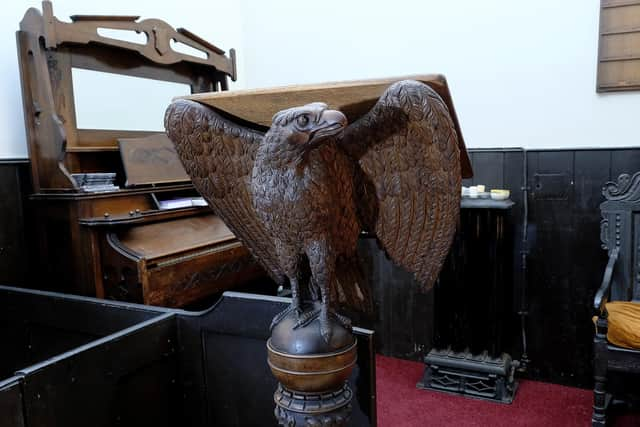
Whitby Unitarian Chapel dates from the early 1700s and was home initially to the Presbyterian nonconformists, which evolved through the 18th Century Age of Reason to become Unitarian.

The movement emphasises freedom from formal dogma and the value of love and the goodness of human nature.
The liberal attitude of the Unitarians led to pioneering inclusion of female clergy and same-sex wedding ceremonies, among other causes.
It was at the Flowergate Unitarian Chapel that Whitby’s first female minister of religion worked.
Her name was Rev Ethel Kay and although she was remembered as a “gentle, unassuming personality” her life story shows her to have been a strong and energetic woman of faith.
Ethel was born in Sunderland on August 9, 1893 to a large family, with at least 10 siblings.
Her father had been the president of the Sunderland Church, and sometimes organist and lay preacher.
She was brought up in the Unitarian chapel in Sunderland, which led to teaching in the Sunday School.
Ethel trained as a lay preacher in the early 1920s, preaching throughout Durham and Northumberland, and attended courses in the Bible and elocution to supplement her elementary education.
She set her sights on becoming an ordained minister and in August 1923, she wrote to the principal of Manchester College (now called Harris Manchester) in Oxford stating her “wish to qualify for the Unitarian ministry.”
She came with glowing references.
She found herself without household duties and moved to Carlisle to devote herself to studying for the University entrance exam, even before having a firm place.
She become unofficial lay leader at Carlisle and began taking services at the Chapel there on alternate Sundays.
There was still prejudice within the college and denomination which held back female ministry students, prompting Ethel to write “I should like to see the door of Manchester College thrown wide to the entrance of women students. Up to the present time it has been a half-open door.”
She had some hands-on ministry training at Upper Chapel, Sheffield during Easter 1927 and received her college diploma that summer .
Soon afterwards she received a “unanimous invitation” to Flowergate Unitarian Chapel in Whitby.
“There was”, we are told, “much speculation at Whitby as to what a lady minister would be like, and, as usual with any innovation, there were many critics.
"[However] her critics were quickly transformed to her friends, and in a quiet and unostentatious manner she has carried through a work which will not readily be forgotten.”
She was inducted as minister on September 22, 1927 and part of the service was conducted by Margaret Barr, her fellow student from Manchester College Oxford.
A year later, Ethel presided at Margaret’s induction at Rotherham Unitarian Church.
Ethel must have been conscious of her place in the old town of Whitby with its fishing community.
Like a breath of fresh sea air, the congregation reported that they felt “confident of renewed life and energy under her leadership.”
The chapel had been without a minister for some years, and was in “low water” but “Miss Kay was insatiable in her desire for work, and Flowergate Old Chapel assumed some of its old-time position.”
She was remembered for her work “among the young folk, to many of whom in Whitby she has acted as mother, counsellor, and friend.”
She was heavily involved in the Whitby branch of the ‘Adult School Movement.’
Passionate about world peace after the Second World War, she was a frequent speaker at the Whitby branch of the Leage of Nations Union.
At the Chapel, there were meetings of the Chapel Literary Society, Women’s Meetings, and in Spring 1928 it was decided to begin holding a morning service. She was also involved with the Unitarian Women’s League both regionally and nationally, and founded a branch at Whitby.
She also brought in the new Unitarian Hymn Book ‘Hymns of Worship’ replacing the older style Hymn Books.
Ethel weathered just two winters in Whitby but achieved a great deal.
In Summer 1929 she accepted an invitation to beome minister of the Unitarian Chapel in Warwick and left Whitby at the start of Autumn.
The room was crowded for her farewell and she was given two framed pictures of Whitby and other gifts. Other apppointments followed at Stepney, Acton and Richmond in London, and finally Dover.
In addition to this, from 1936 to 1944 she was secretary of the Unitarian Central Postal Mission.
Ethel’s commitment to promoting peace only increased during the Second World War.
She helped to establish a branch of the Fellowship of Reconciliation in the late 1930s in Stepney, and the branch included representatives of 12 neighbouring churches and usually met at Ethel’s house.
Ill health began to affect her work and she had to resign from a position she took later in Dover.
Ethel went to live with her sisters Ada and Annie in Barnsley.
Her sister Annie died on April 1, 1962 at home.
Within a few years, Ethel died on August 10, 1964 aged 71, at Becket Hospital following an unsuccessful operation.
As her obituary said, “years of ill health and the subsequent strain on her heart proved too much.”